


MENA Weekly Round-Up: Türkiye’s Solar Capacity Expands to 25.8 GW
Here are some noteworthy cleantech news and announcements from around the Middle East and North Africa region this week
March 24, 2026

Follow Mercom India on WhatsApp for exclusive updates on clean energy news and insights
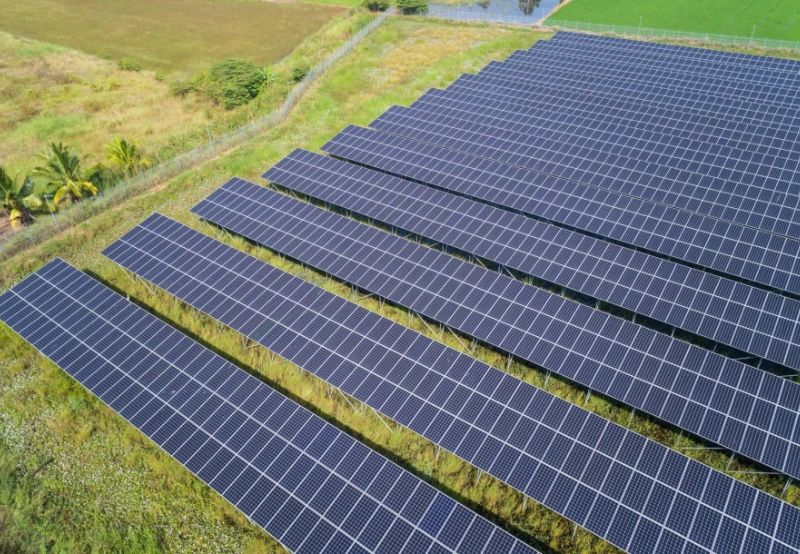
Türkiye expanded its solar energy capacity to 25,827 MW at the end of January 2026, from 40.2 MW in 2014. Solar accounted for 20.9% of total installed power capacity at the beginning of 2026. Solar electricity generation, which was 17 GWh in 2014, rose to 38,069 GWh by the end of 2025. Türkiye’s installed solar power capacity increased 641 times by the end of January 2026. The country plans to install 120,000 MW of installed solar and wind capacity by 2035.
France-based energy transition company ENGIE signed a power purchase agreement with the Egyptian Electricity Transmission Company to develop a 900 MW onshore wind farm near Ras Shokeir, in the Gulf of Suez, Egypt. The wind project will be set up under a 25-year build-own-operate program. It will be developed by a consortium comprising ENGIE (35%), Orascom Construction (25%), which will also execute all civil and electrical balance-of-plant works and supply local components, and Aeolus (40%), an African renewable energy independent power producer platform of Toyota Tsusho Corporation.
The financial close for the wind farm is expected by the early third quarter of 2026. The first wind turbines are expected to be delivered at the end of the year. The project will be commissioned in phases. Its first 300 MW is scheduled to come online in December 2027, and full commercial operation of the 900 MW capacity is expected to begin mid-2028.
The commercial-scale liquid hydrogen (LH₂) corridor linking Oman with the Netherlands and Germany is gaining momentum at the European end. Global energy logistics company Ecolog International, a key stakeholder in the transcontinental project, appointed two prominent engineering firms to develop a terminal at the Port of Amsterdam dedicated to the storage and handling of LH₂ and liquid carbon dioxide. The announcement comes nearly a year after Oman signed a joint development agreement to establish the LH₂ corridor. The corridor will enable the export of renewable fuels of non-biological origin-compliant LH₂ from the Port of Duqm to the Port of Amsterdam and key logistics hubs in Germany, including the Port of Duisburg, and onward to other European markets.


Melvin Mathew
More articles from Melvin Mathew.