UAE Solar Capacity Set to Rise From 6.7 GW to 32.3 GW by 2035: Report
Solar generation is forecast to rise from 15.8 TWh to 75.4 TWh during the same period
March 24, 2026
Follow Mercom India on WhatsApp for exclusive updates on clean energy news and insights
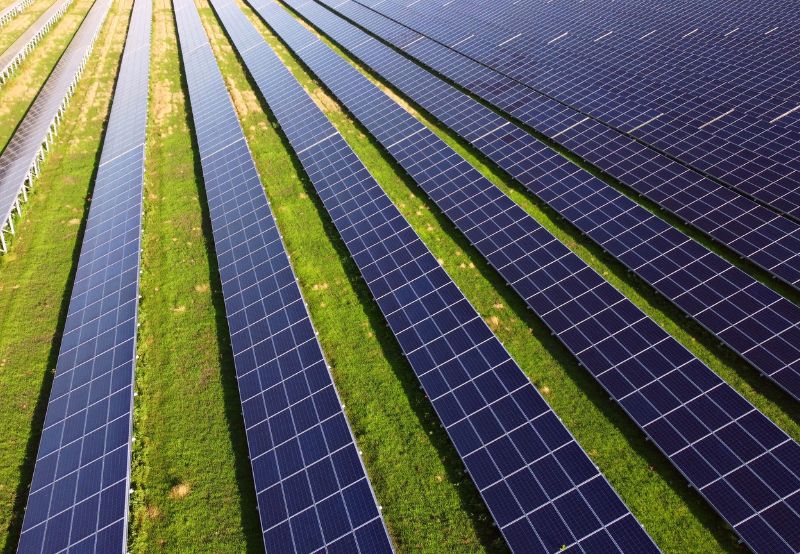
Solar capacity in the United Arab Emirates (UAE) is projected to increase from 6.7 GW in 2025 to 32.3 GW by 2035, registering a compound annual growth rate of over 17%, according to GlobalData’s report, “United Arab Emirates Power Market Trends and Analysis by Capacity, Generation, Transmission, Distribution, Regulations, Key Players and Forecast to 2035.”
Solar generation is forecast to rise from 15.8 terawatt-hours (TWh) to 75.4 TWh over the same period, marking a nearly fivefold increase and significantly expanding its share of the national electricity mix.
This growth is being driven by large-scale solar developments across the country. The Al Dhafra Solar facility is currently the world’s largest single-site solar facility, reflecting the scale of deployment in the UAE.
The Noor Abu Dhabi Solar Park, with an installed capacity of 1.2 GW, contributes significantly to the clean energy supply and is estimated to reduce carbon emissions by approximately 1 million metric tons annually.
In Dubai, the Mohammed bin Rashid Al Maktoum Solar Park, spread over approximately 4,000 acres, is expected to generate enough electricity to power nearly 800,000 homes by 2030.
These projects have also enabled the UAE to achieve some of the lowest solar tariffs globally through competitive procurement processes.
The expansion aligns with the policy framework outlined in the UAE Energy Strategy 2050, which includes planned investments of approximately $54 billion in clean and alternative energy infrastructure.
The broader strategy aims to achieve 50% clean energy in the electricity mix and reduce the carbon footprint of power generation by 70% by 2050.
Despite this expansion, conventional energy sources are expected to continue playing a key role in maintaining grid stability. Gas-fired capacity is projected to increase from 44.4 GW in 2025 to nearly 46 GW by 2035, remaining the dominant source of power generation. Gas-based systems are critical for meeting peak demand, supporting desalination, and balancing variable renewable output.
Over the next decade, the UAE is expected to focus on integrating increasing volumes of solar capacity while ensuring system reliability through gas flexibility, nuclear baseload generation, and storage additions, including pumped storage and battery systems.
In MENA, renewables continue to strengthen their cost leadership. Wind and solar LCOEs fell 6–10% year-on-year in 2025, with utility-scale solar PV acting as the region’s price setter.
Exceptional irradiance levels and robust net capacity factors, particularly in Saudi Arabia and the UAE, underpin this trend. Single-axis tracker systems are projected to reach $17/MWh by 2060, maintaining a wide margin over onshore wind, which is expected to stabilize around $30/MWh.