Solar Open Access Primary Growth Engine for C&I Units in India: Interview
Customer demand and financing models reshape solar adoption
February 9, 2026
Follow Mercom India on WhatsApp for exclusive updates on clean energy news and insights
India’s commercial and industrial (C&I) renewable energy market is undergoing a structural transition, with distributed solar growing beyond rooftop installations toward larger green open-access projects.
Rising electricity costs, corporate decarbonization targets, and the need for long-term cost visibility are pushing C&I consumers to reassess how they procure clean power.
At the same time, financing structures, performance-linked ownership models, regulatory interventions such as the Approved List of Models and Manufacturers (ALMM), and the early-stage adoption of battery energy storage systems are influencing investment and execution decisions across the sector.
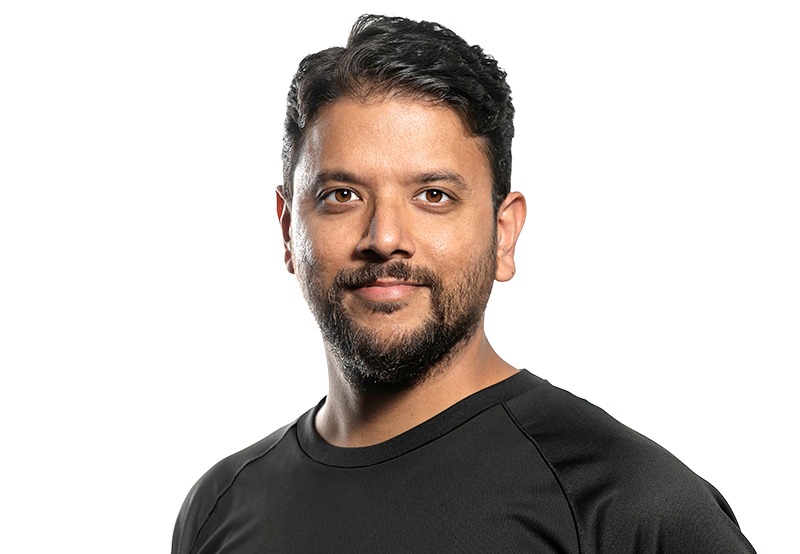
Against this backdrop, in an exclusive interview with Mercom India, Nishant Sood, Managing Director (India) at Candi Solar, discussed how customer demand is driving the shift toward green open access, how risk allocation and financing models are evolving, and the operational and regulatory challenges that continue to affect project development.
He shared insights on how C&I consumers are approaching battery storage, the implications of ALMM on procurement and timelines, and why execution capability is becoming a key differentiator in India’s distributed and open-access solar market.
Could you briefly introduce Candi Solar and what it does in the Indian market? How does your contracted pipeline in India compare with commissioned capacity, and what is your commissioning target for the financial year (FY) 2026?
Candi Solar is a Swiss-based, end-to-end solar solution provider that develops, finances, builds, and operates distributed solar projects for commercial and industrial customers in India & South Africa. Our focus is on rooftop and open access solar, with long-term performance accountability built into every project.
Today, Candi has around 230 MW of capacity globally, with approximately 160 MW to 165 MW in India. Our contracted pipeline stands at close to 300 MW globally, reflecting strong customer demand and repeat deployments. Looking ahead to FY 2026, we are targeting a total commissioned capacity of approximately 400 MW globally, with India remaining our largest growth market.
How is your India pipeline currently split between rooftop and green open access, and what mix are you targeting over the next 12–24 months?
Today, our India pipeline is increasingly weighted towards green open access. In 2025, the mix was split fairly evenly between rooftop and open access. In the next 12 months, we expect open access to be 60-70% of our added portfolio, and over the 12 subsequent months, we expect open access to rise further to around 75%.
The driver is straightforward: many C&I customers start with rooftop, but once on-site space is fully utilized, open access becomes the natural route to scale renewable procurement.
What drove your expansion into larger green open access projects: customer demand, better returns and margins, or limits to scaling rooftop solar?
The expansion has been driven primarily by customer demand. Most customers start with rooftop solar and eventually hit physical space limits. Once that happens, green open access becomes the only viable way to meaningfully scale renewable consumption.
At the same time, traditional open access structures, especially group captive power purchase agreements (PPAs), often introduce equity complexity, rigidity, and long-term inflexibility for customers. That gap is where performance-linked open access comes in. It offers the best of both CAPEX and OPEX.
Customers own the solar plant, continue to claim accelerated depreciation and GST input credit, and retain long-term economic upside. At the same time, performance responsibility is transferred to Candi, allowing customers to scale clean power without taking on performance or operational risk.
This alignment of ownership, scale, and accountability is what has driven adoption.
Within the C&I segment, where is your primary focus today: small and medium enterprises (SMEs) or large corporates? What demand trends are you seeing for distributed solar?
Our focus spans both SMEs and large corporates, but the use cases differ. For SMEs, solar is increasingly viewed as a tool for cost stability and energy independence.
For larger corporates, it has become both an economic and strategic decision, linked to supply-chain decarbonization, environmental, social, and governance commitments, and long-term competitiveness.
One clear trend we’re seeing is that earlier, many businesses went solar primarily because they had RPO obligations, customer audits, ESG scorecards, or policy nudges. Today, those requirements still exist, but they are no longer the sole driver.
Solar decisions are now being made because they are increasingly driven by economics, reliability, and long-term cost visibility, not incentives alone. Distributed solar, in particular, is gaining traction because it reduces stress on transmission infrastructure and brings generation closer to consumption centers.
You offer OPEX-based solutions. What level of demand are you seeing for these in India, and what questions do customers most frequently raise when evaluating OPEX?
There is a strong and growing market for OPEX-based solutions in India. Customers typically focus on generation certainty, tariff, and landed cost, especially in open-access structures where transmission losses and additional charges impact the effective tariff.
Most customers initially compare the landed tariff against the grid tariff. We encourage customers to look beyond this and evaluate projects using Levelized Cost of Electricity (LCOE), which provides a more complete view of lifetime savings and risk-adjusted returns.
With multiple public and private banks offering green financing at competitive rates, how does Candi Solar’s financing model solve customer needs differently? What specific pain points does it address?
Bank financing solves only one part of the problem, which is access to capital. What customers are increasingly realizing is that financing alone does not guarantee performance, savings, or operational reliability.
Even before a plant is commissioned, when customers go in a CAPEX model, they are exposed to construction-stage risks like delays in execution, oversizing systems to maximize billing, or compromises on equipment quality – because engineering, procurement, and construction (EPC) are typically paid for construction, not for long-term performance.
Once the project is commissioned, the responsibility of managing the asset, ensuring uptime, and delivering promised savings still sits entirely with the customer. Candi’s model addresses this gap.
Similar to a bank loan, the solar plant sits on the customer’s books, allowing them to claim GST input credit and accelerated depreciation. However, the difference lies in risk allocation. Customers pay only for the electricity generated, at a contracted rate of ₹/kWh.
This means the risk of construction quality, execution, operations, and long-term performance is contractually transferred to Candi Solar. As a result, the financial projections made at the outset are realized in practice, not just on paper.
We don’t just help customers build solar assets. We ensure those assets deliver consistent value over their entire lifecycle.
How are Indian C&I customers approaching battery energy storage systems today? Which learnings from South Africa are most applicable to India, and how do you see BESS pricing evolving in the near and longer term?
Battery storage adoption in India is still at a developing stage. Customers are primarily exploring BESS for three reasons: achieving net-zero operations, arbitraging peak and off-peak tariffs, and meeting regulatory mandates in certain states such as Rajasthan.
Unlike South Africa, where grid instability makes the value of storage immediately clear, the current pricing premium in India does not yet make economic sense at scale. However, prices are trending downward, and as technology improves and manufacturing scales, adoption is expected to increase meaningfully.
How has ALMM influenced your module procurement strategy? What are the key procurement bottlenecks, and how are you navigating them?
ALMM has introduced uncertainty into availability, pricing, and timelines, directly impacting project planning. The key challenge is not just cost, but predictability. Even when customers are willing to absorb higher prices, availability constraints can affect commissioning schedules and overall project economics.
Our approach has been to assume ALMM implementation as scheduled, complete previously signed projects using available modules where possible, and be transparent with new customers about potential pricing changes and commissioning delays.
We are proactively managing expectations and sharing risks upfront rather than absorbing uncertainty later in the project lifecycle.
What are your main on-ground execution challenges across markets: permits, DISCOM processes, land acquisition, EPC capacity, or grid connectivity? Which of these could evolve into opportunity areas for installers and developers?
Grid connectivity and land acquisition have emerged as the most significant execution challenges, particularly for open-access projects. Substation availability, transmission approvals, and right-of-way constraints are increasingly becoming bottlenecks.
At the same time, these challenges create opportunities for EPCs and developers who can build strong capabilities in land aggregation and grid integration. Execution quality will increasingly differentiate serious players in the market.
This interview was sponsored by Candi Solar