Sanathan Textiles to Procure Power from Serentica’s 38 MW Wind-Solar Project
Sanathan Polycot will invest ₹480 million to acquire a 26% stake in the project
March 25, 2026
Follow Mercom India on WhatsApp for exclusive updates on clean energy news and insights
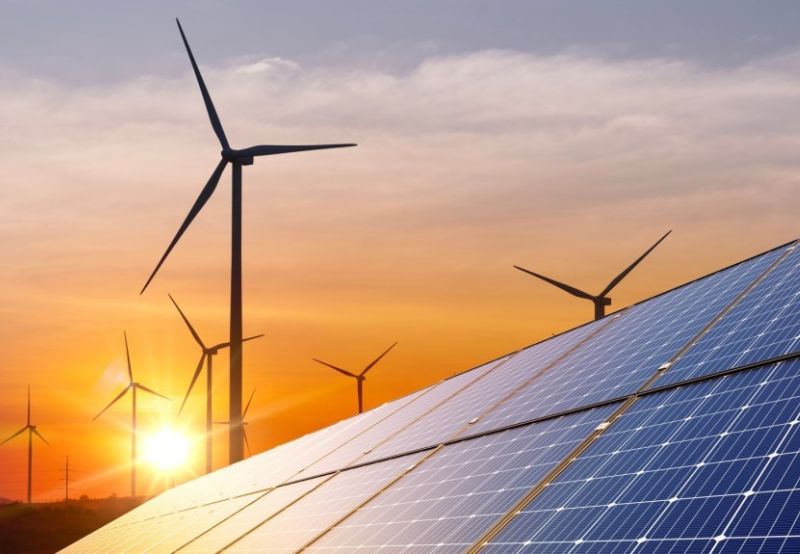
Mumbai-based yarn manufacturer Sanathan Textiles will procure power from Serentica Renewables’ 38 MW wind-solar hybrid project under a captive arrangement.
Sanathan Polycot, a subsidiary of Sanathan Textiles, will invest ₹480 million (~$5.1 million) to acquire a 26% stake in Serentica Renewables India 33, a subsidiary of Serentica Renewables.
The wind-solar power will be used to run the manufacturing facilities of Sanathan Polycot.
Sanathan Textiles manufactures polyester yarn and supplies cotton, polyester, and technical textile yarns for the global markets.
The company has installed a 2.35 MW rooftop solar project at its Silvassa facility since 2019 and is planning to install solar projects and biomass-based heating using rice husk at its Punjab facility.
Sanathan’s Silvassa factory has a 200,750 MTPA polyester filament yarn manufacturing facility, and its Punjab unit has a 346,250 MTPA facility for the manufacture of polyester filament yarn.
India added 7.8 GW of solar open access capacity in 2025, a largely flat 0.5% year-over-year growth from 7.7 GW, according to Mercom’s Q4 & Annual 2025 India Solar Open Access Market Report. The country’s cumulative installed solar open access capacity exceeded 30 GW as of December 2025.
In 2025, Karnataka, Maharashtra, Rajasthan, Gujarat, and Tamil Nadu led solar open access installations, contributing to slightly over 85% of the total.
Power-intensive industries have been the biggest enablers of solar open access growth in the country. According to industry experts, the textile sector can save 20% to 30% on electricity costs by shifting to solar open access.
Commercial and Industrial consumers remain the single largest category of electricity users in India, accounting for nearly 42% of total electricity consumption in recent years. This dominance is most pronounced in open access power-friendly states such as Maharashtra, Gujarat, Tamil Nadu, Karnataka, and Rajasthan, which host large industrial clusters.
In a big boost to power procurement under the captive arrangement, the Ministry of Power allowed group captive projects to meet the 51% consumption requirement collectively rather than based on the individual proportionality requirement. The move has raised hopes for increased adoption of open access by C&I consumers.