Major Events that Impacted the Indian Solar Sector in 2025

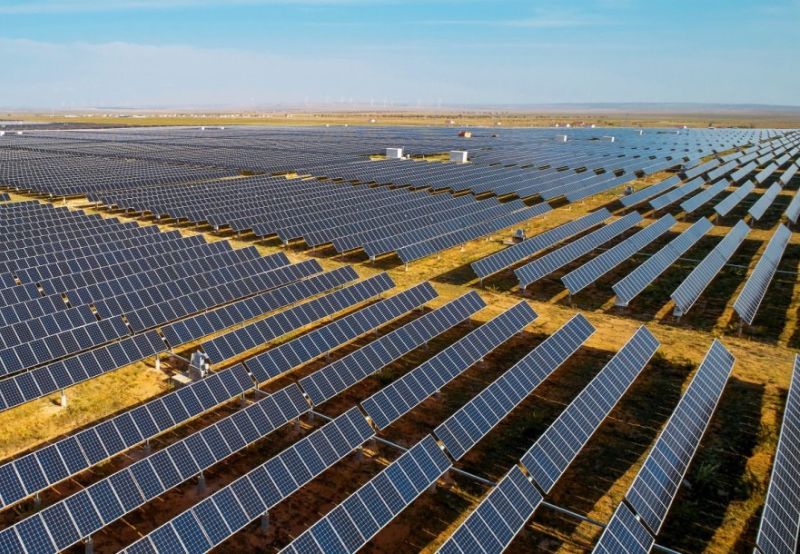
As of September 2025, India’s cumulative installed solar capacity stood at 125.5 GW

thumbnail

Follow Mercom India on WhatsApp for exclusive updates on clean energy news and insights


India added 26.6 GW of solar capacity in the first nine months (9M) of the calendar year (CY) 2025, an increase of 53.7% year-over-year (YoY) from 17.3 GW, according to the Q3 2025 India Solar Market Update Report by Mercom India Research.

Large-scale solar accounted for 81.5% of the capacity commissioned in 9M 2025, while rooftop solar contributed 18.5%. In large-scale additions, solar open-access projects accounted for 28.3% of the total during the period. As of September 2025, India’s cumulative installed solar capacity stood at 125.5 GW.

Here are some of the major developments that significantly impacted the sector in 2025:

GST Cut

In a significant boost to the renewable energy component manufacturing, the Ministry of Finance reduced the goods and services tax (GST) on solar cells, wind energy generators, and biogas plants from 12% to 5%. Solar cells, regardless of whether they are assembled into modules, will now be subject to a GST of 5%. The same rate of GST will apply to solar lanterns/solar lamps, solar cookers, solar water heaters and systems.

ISTS Charges Waiver

The Central Electricity Regulatory Commission (CERC) issued a time frame for waiving interstate transmission (ISTS) charges for renewable energy projects. Wind, solar, and hybrid projects commissioned on or before June 30, 2025, will receive a full 25-year waiver. Projects commissioned in successive years up to June 30, 2028, will receive progressively lower waivers, reducing from 75% to 25%. Projects commissioned after June 30, 2028, are not eligible for a waiver.

ALMM List III

Accelerating its push to create domestic manufacturing capacity across the solar value chain, the government proposed mandating the use of India-made wafers under the Approved List of Models and Manufacturers (ALMM) starting June 1, 2028. The amendment proposes that all projects falling under ALMM’s purview must mandatorily source their modules from ALMM List-I. Such modules must also use solar cells from the ALMM List-II for solar cells. The cells, in turn, must use wafers from ALMM List-III. For enlistment in ALMM List-III, the wafer manufacturer must possess an ingot manufacturing capacity equivalent to the wafer manufacturing capacity that it intends to get enlisted in ALMM.

Inverter Integration with PM Surya Ghar Portal

The Ministry of New and Renewable Energy (MNRE) mandated that all original equipment manufacturers (OEMs) enlisted to supply inverters under the PM Surya Ghar: Muft Bijli Yojana integrate inverter communication devices with the PM Surya Ghar portal. The move comes amid reports that inverter communication devices are transmitting data to servers outside India, potentially risking grid disruptions. The inverters must also be connected to software managed by the MNRE or any other agency designated by it. The integration of inverter communication devices with the portal was rolled out for the testing phase from September 1, 2025.

RCO Compliance

The Ministry of Power prescribed a renewable energy consumption obligation (RCO) for designated consumers to achieve a 43.33% target by the financial year 2030. The regulation specifies minimum renewable energy consumption requirements for electricity distribution licensees, open access consumers, and captive users. The target of 43.33% RCO by FY 2030 comprises 3.48% from wind energy, 1.33% from hydro energy, 4.5% from distributed renewable energy, and 34.02% from other renewable energy sources.

Storage Integration in Solar Tenders

The Ministry of Power issued an advisory to renewable energy implementing agencies and state utilities to incorporate a minimum of a two-hour co-located energy storage system (ESS) equivalent to 10% of the installed solar capacity into all solar tenders. The ESS mandate is expected to resolve intermittency issues and provide critical support during peak demand hours. The government expects approximately 14 GW/28 GWh of storage to be installed by 2030 through this mandate.

Utility-led Rooftop Solar Installations

The government launched a utility-led aggregator (ULA)/renewable service company (RESCO) mode program under the PM Surya Ghar to enable households without suitable rooftop space to benefit from the program. Ground-mounted projects, or any other aggregator models such as community solar or off-site installations, can only be included under the ULA/RESCO mode in the program with MNRE’s permission. The Ministry also limited solar power projects under the program in capital expenditure (CAPEX) mode to ground-mounted and elevated solar power projects. Initially, all types of solar installations were permitted under RESCO/ULA and CAPEX modes.

Efficiency Standards

MNRE released the “Solar Systems, devices and Components Goods Order, 2025,” setting performance standards for solar modules, inverters and storage batteries. All goods, including crystalline silicon terrestrial photovoltaic modules, thin-film modules, storage batteries, power inverters, and utility-interconnected inverters, must conform to Bureau of Indian Standards (BIS) standards and have its ‘standard mark’ under license. BIS will be the certifying and enforcing authority and conduct market surveillance in consultation with MNRE to ensure that the goods bear the standard mark.

DCR Certificate Number

MNRE mandated generating and inputting the 16-digit Domestic Content Requirement (DCR) certificate number on the PM Surya Ghar portal to prevent duplicate module serial number issues. Vendors will no longer be allowed to enter serial numbers manually, and the integrated DCR and PM Surya Ghar portal will automatically generate module serial numbers. The process will likely remove any possibility of inadvertent errors while entering module serial numbers and remove the chances of duplicate serial number issues.

ALMM for Behind-the-Meter Projects

The Ministry of New and Renewable Energy clarified that behind-the-meter projects for captive consumption by government entities or public sector enterprises must use solar modules from ALMM. However, these projects are exempt from using ALMM-compliant cells if they were commissioned before June 1, 2026. Projects commissioned after this deadline must use ALMM-listed modules and cells. The Ministry clarified that this exemption does not apply to behind-the-meter connections for captive consumption by government entities or public sector enterprises, as government projects have been covered under ALMM from the beginning.

RELATED POSTS

Get the most relevant India solar and clean energy news.

RECENT POSTS