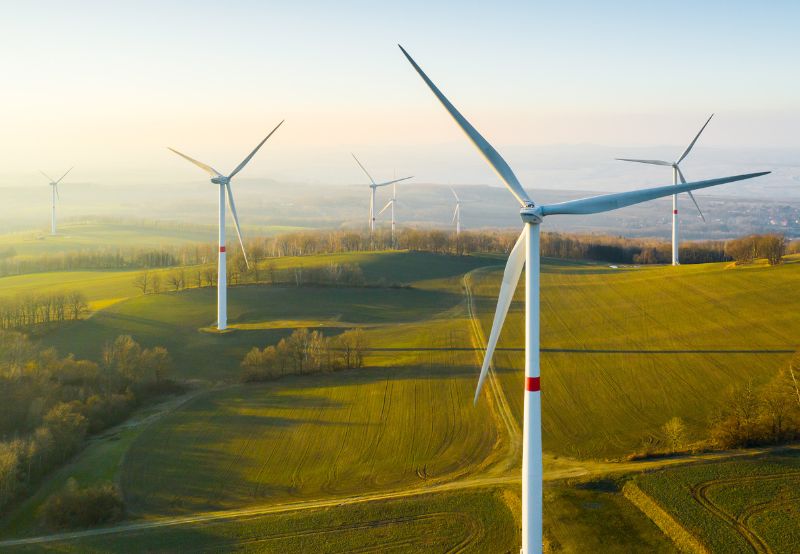
Karnataka Proposes Tariff Cap of ₹3.24/kWh for Wind Projects Until FY 2029

Stakeholders can submit their feedback by April 9, 2026

thumbnail

Follow Mercom India on WhatsApp for exclusive updates on clean energy news and insights


The Karnataka Electricity Regulatory Commission (KERC) has issued a discussion paper proposing a generic ceiling tariff of ₹3.24 (~$0.0346)/kWh for wind power projects for the financial year (FY) 2026-27 to FY 2028-29.

The proposed tariff is lower than the existing ceiling tariff of ₹3.34 (~$0.0356)/kWh, which is applicable until March 31, 2026.

Stakeholders can submit their feedback by April 9, 2026.

Under the prevailing regulatory framework, procurement of wind power by power distribution companies in Karnataka must be undertaken through a competitive e-reverse bidding process.

The tariff discovered through such bidding must comply with central government guidelines under Section 63 of the Electricity Act and remain within the ceiling tariff determined by the Commission.

In developing the proposed tariff, the Commission has referred to international studies, including reports from the International Renewable Energy Agency and the National Renewable Energy Laboratory, which indicate a decline in capital costs for wind projects, reductions in operations and maintenance expenses, and an increase in capacity utilisation factors over time.

The Commission has also relied on project-level data provided by Karnataka Renewable Energy Development for 52 wind projects, aggregating approximately 492 MW, commissioned in the last three years up to January 31, 2026. The data indicate capital costs in the range of ₹52.8 million (~$562,470)/MW to ₹90 million (~$958,755)/MW, with capacity utilisation factors reaching up to 39.7%.

Based on the available data and observed trends, the Commission has proposed normative parameters for tariff determination. These include a capital cost of ₹65 million (~$692,411)/MW, including evacuation costs, and a capacity utilisation factor (CUF) of 33%. Operations and maintenance expenses are proposed at ₹1 million (~$10,652)/MW for the base year, with an annual escalation of 5%.

The financial parameters proposed in the draft include a debt-equity ratio of 70:30, return on equity of 14%, and a debt tenure of 15 years. Interest on term loans has been proposed at 9.50%, based on prevailing lending rates, while interest on working capital has been proposed at 11%. Depreciation is proposed at 4.67% per annum for the first 15 years, with the balance spread over the remaining life of the project.

The Commission has proposed auxiliary consumption of 0.5% of gross generation at normative CUF. Income tax, along with surcharge and cess, is proposed to be treated as a pass-through and to be claimed separately from distribution licensees based on actual payment.

Based on these parameters, the levelized tariff has been computed at ₹3.24 (~$0.0346)/kWh.

The paper states that this tariff will serve as the ceiling tariff for calling bids during FY 2026-27 to FY 2028-29.

It is also proposed to apply to payments for any banked energy purchased by power distribution companies.

India added 6.3 GW of wind power capacity in 2025, an 85.2% YoY increase from 3.4 GW in 2024, according to Mercom India Research. The additions marked the highest annual wind installations recorded in the country. As of December 2025, the cumulative installed wind capacity stood at 54.5 GW.

Subscribe to Mercom’s real-time Regulatory Updates to ensure you don’t miss any critical updates from the renewable industry.

RELATED POSTS

Get the most relevant India solar and clean energy news.

RECENT POSTS