Gujarat’s New Renewable Energy Policy Targets 150 GW by 2035
The state plans a single window mechanism to improve the ease of doing business
December 26, 2025
Follow Mercom India on WhatsApp for exclusive updates on clean energy news and insights
The Government of Gujarat has notified the Integrated Renewable Energy Policy, 2025, marking a significant step toward consolidating the state’s renewable energy ambitions under a single, unified framework.
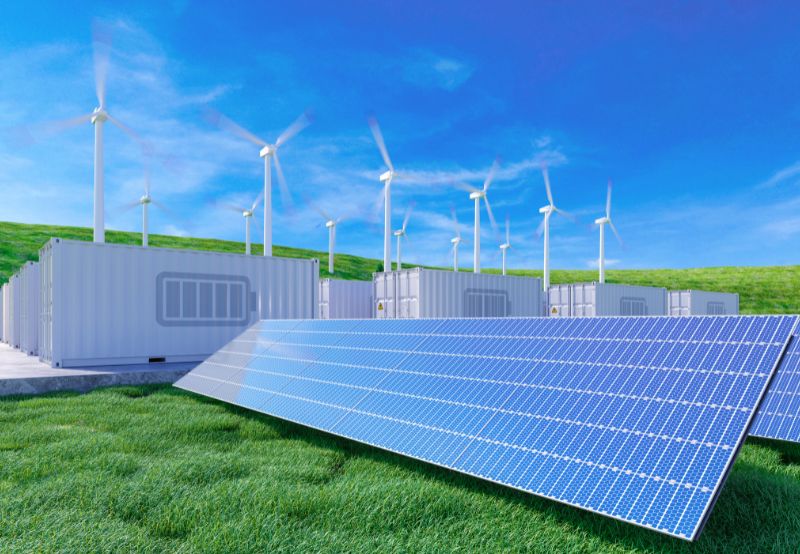
The policy is designed to support large-scale deployment of renewable power, energy storage, and emerging clean technologies, while strengthening Gujarat’s position as a national and global hub for clean energy development.
The policy will be in force until December 31, 2030.
Renewable energy projects commissioned during the operative period will be eligible for incentives and benefits for 25 years from the date of commissioning, or for the projects’ useful life.
The policy supersedes the Gujarat Renewable Energy Policy, 2023. Projects already under implementation under the 2023 policy may continue within the timelines specified in their existing approvals or within six months from the notification, after which the new framework will govern them.
Gujarat Urja Vikas Nigam has been designated as the implementing and monitoring agency for the policy, while Gujarat Energy Development Agency will act as the state nodal agency responsible for project registration, certification, and coordination with regulators.
A single-window clearance mechanism is proposed to improve ease of doing business, supported by provisions for periodic review, dispute resolution, and the issuance of clarifications or amendments by the state government as required.
Capacity Expansion and Climate Targets
The policy sets out ambitious capacity and decarbonization targets that align with national climate commitments.
Gujarat aims to achieve more than 150 GW of installed renewable energy capacity by 2035 and scale this to 300 GW by 2047.
The state also aims to meet over 50% of its total energy consumption from non-fossil fuel sources by 2030.
In addition to capacity growth, the policy focuses on reducing Gujarat’s carbon intensity by more than 45% by 2030, compared to 2005 levels.
Scope, Eligibility, and Project Models
The policy adopts a technology-neutral approach and applies to renewable energy projects with or without energy storage. It allows individuals, companies, cooperatives, associations, and special purpose vehicles to develop projects for captive consumption, third-party sale, sale to distribution companies, or under the renewable energy certificate mechanism, without any capacity restrictions linked to a consumer’s sanctioned load.
Technologies Covered
The policy covers a wide range of renewable energy technologies, including solar and wind projects, wind–solar hybrid installations, battery energy storage systems, and pumped hydro storage projects.
Emerging sources such as tidal and wave-based ocean energy and geothermal energy are also included.
The policy further covers rooftop solar, floating and canal-based solar, agriphotovoltaics, distributed solar projects for agricultural feeders, rooftop wind systems, and off-grid renewable energy projects.
Renewable energy projects linked to green hydrogen and green ammonia production are recognised. However, green hydrogen production units and pumped storage hydro projects will be governed under separate policies to be notified by the state government.
Solar
The policy expands beyond conventional ground-mounted and rooftop installations. It introduces group net metering and virtual net metering, subject to regulatory approval, to enable participation by apartment complexes, housing societies, and consumers with limited rooftop space.
The policy also promotes distributed solar projects for the solarisation of agricultural feeders under the PM-KUSUM, with distribution companies responsible for network strengthening and substation upgrades.
Wind
Wind energy projects may be set up within or outside designated wind parks on government or private land. The policy promotes wind resource assessment through met masts and automatic weather stations. It provides for the extension of wheeling agreements for wind projects beyond their initial tenure, subject to regulatory approval, through the project’s 25-year life.
Wind–Solar Hybrid Projects
The policy provides detailed classification for wind–solar hybrid projects, including type-A projects involving the hybridization of existing or under-construction wind or solar assets, and type-B projects covering new hybrid installations. Hybrid projects may be developed with or without battery energy storage systems, subject to grid feasibility and regulatory approvals.
The policy specifies technical norms for AC integration, metering architecture using ABT-compliant meters, energy apportionment between wind and solar components, and limits on total power injection based on sanctioned transmission capacity. Rooftop wind–solar hybrid projects are also recognised, with separate implementation guidelines to be issued.
Battery Energy Storage Systems
Battery energy storage systems have been identified as a cornerstone of Gujarat’s renewable energy strategy. The policy allows both co-located and standalone BESS projects, enabling their deployment alongside renewable generation and within the grid as independent assets.
BESS projects will be governed under energy storage obligation regulations issued by the Gujarat Electricity Regulatory Commission, with the state retaining the ability to mandate higher procurement levels where required for grid stability.
The policy enables BESS participation in ancillary services and emerging capacity markets, with charging energy sourced through mutually agreed arrangements.
Renewable Energy Parks and Repowering
The policy promotes the development of renewable energy parks with a minimum capacity of 50 MW to optimize land and transmission infrastructure, covering solar, wind, and hybrid projects. Gujarat Power Corporation or other designated agencies may act as park developers.
It also introduces a comprehensive framework for the repowering and life extension of ageing wind projects, encouraging the replacement of old turbines with higher-capacity machines. Incentives include relaxed micro-siting norms, transmission charge waivers during repowering, and priority grid connectivity, subject to feasibility.
Procurement and Tariffs
Power procurement under the policy may take place through competitive bidding in line with central government guidelines or through pre-fixed tariffs for smaller solar and wind projects based on rolling averages of discovered tariffs. Distribution companies are permitted, but not obligated, to procure additional power resulting from repowering or hybridisation of existing projects.
Energy Banking and Settlement
Energy banking, scheduling, forecasting, and deviation settlement will continue to be governed by existing state and central regulatory frameworks. Energy settlement for banking consumers will be conducted on a billing-cycle basis, while non-banking and renewable energy certificate projects will follow 15-minute time-block-based settlement.
The policy exempts residential solar consumers from banking charges. It clarifies that unutilised energy at the end of the settlement period will be treated as inadvertent flow, except where otherwise specified by regulation.
Grid Connectivity and Infrastructure
Recognising the importance of evacuation infrastructure, the policy emphasises grid connectivity and planning. It sets out timelines for the development of transmission and distribution infrastructure, bank guarantee requirements, penalties for delays, and the mandatory installation of smart meters, remote terminal units, and ABT-compliant metering systems.
The policy also supports the development of dedicated green energy corridors and highlights the Akshay Urja Setu Portal as a single-window platform for connectivity and approvals.
Electricity Duty and Carbon Credits
The policy notes that there is currently no electricity duty on the consumption of renewable energy in Gujarat. It also clarifies the treatment of carbon credits, stating that renewable energy projects will be eligible for carbon credits, with benefit-sharing governed by tariff orders or power purchase agreements. For rooftop projects implemented under government schemes, carbon credit benefits must be passed on to distribution companies.
Land, Water, and Industrial Support
To address non-tariff barriers, the policy provides facilitative measures related to land and water availability. Renewable energy projects may be allotted land on a priority basis in Gujarat Industrial Development Corporation estates, subject to availability and feasibility. In contrast, government waste land may be allocated at concessional rates for projects supplying power to state distribution companies.
The policy mandates fair land acquisition practices and supports water sourcing solutions, including desalination infrastructure for energy-intensive applications.
Renewable energy equipment manufacturing, including components for energy storage and advanced technologies, is treated as an eligible industrial activity under state industrial policies. The policy promotes low-carbon manufacturing, green logistics, the use of recycled materials, and circular economy principles, including the recycling and responsible disposal of solar and wind waste.
Emerging Technologies and Innovation
In line with the rapidly evolving clean energy landscape, the policy actively encourages the adoption of advanced technologies. This includes support for high-efficiency solar modules, artificial intelligence-enabled smart grids, wind technology prototypes, and pilot projects in ocean and geothermal energy, as well as public–private partnerships for research and development and startup-led demonstration projects.
Employment and Skill Development
The renewable energy transition is expected to generate significant employment opportunities across Gujarat. The policy estimates creating around 100,000 green jobs by 2030 across manufacturing, installation, operations, maintenance, recycling, and allied services.
Skill development initiatives will be undertaken in coordination with the Gujarat Skill Development Mission and industry partners, with a focus on certified training programmes, apprenticeship-based learning, renewable energy skilling hubs near major project zones, and greater participation by women, local youth, and rural communities.
Subscribe to Mercom’s real-time Regulatory Updates to ensure you don’t miss any critical updates from the renewable industry.