Global Energy Investment Hits $3.4 Trillion as Security Concerns Reshape Spending
India’s energy investment to reach $170 billion in 2026
June 1, 2026
Follow Mercom India on WhatsApp for exclusive updates on clean energy news and insights
Global energy investment is expected to reach $3.4 trillion in 2026, a 5% increase from 2025, as spending rises on electricity systems, energy security, and domestic energy resources, according to the latest World Energy Investment 2026 report released by the International Energy Agency (IEA).
The report said around $2.2 trillion is expected to go to renewables, nuclear, grids, storage, low-emissions fuels, efficiency, and electrification. Around $1.2 trillion is expected to go to oil, natural gas, and coal.
The IEA said the Middle East conflict, following the global energy crisis from 2021 to 2023, is expected to reinforce energy security as a priority for governments and companies. The report said Asia has been directly affected because it received 80% to 90% of Gulf energy exports.
Electricity-related spending now accounts for nearly 60% of global energy investment. Investment in electricity supply and infrastructure is expected to reach $1.6 trillion in 2026 and rise to $2 trillion when end-use electrification is included.
Grid spending is expected to reach around $550 billion in 2026, up nearly 20% from 2025, while power-sector battery spending is expected to exceed $100 billion. The IEA said the increase in grid and storage investment marks a rebalancing after years in which grid investment lagged generation capacity growth.
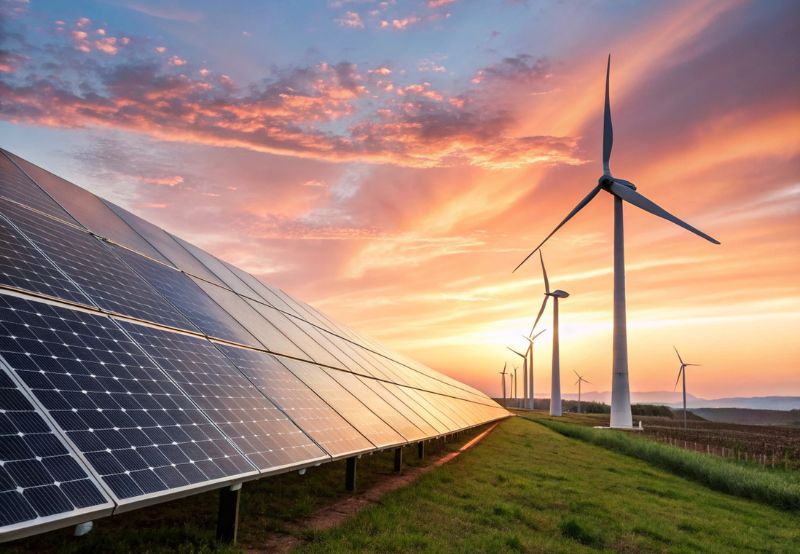
Renewable power investment is expected to total around $665 billion annually. Solar accounts for $365 billion, equivalent to nearly $1 billion per day. Wind accounts for $200 billion, while hydropower accounts for $75 billion.
India Investment
India’s energy investment has grown 11% annually on average over the past five years and is expected to reach $170 billion in 2026, according to the report.
Solar investment in India grew 25% annually during the period, while oil refining investment grew 23%. The IEA said the two sectors together accounted for one-fourth of India’s energy investment growth.
The rise in oil refining investment has put India on track for a nearly 15% increase in refining capacity by 2030. The report said India is a net exporter of refined products but imports most of its crude oil needs.
Coal remains central to India’s power generation and industrial energy requirements. Investment in coal is expected to reach $13 billion in 2026 to support the government’s target of 1.5 billion tons of production by 2030.
Power sector investment accounts for around half of India’s total energy sector spending. In 2025, India achieved its Nationally Determined Contribution target of 50% power generation capacity from non-fossil sources, five years ahead of schedule. The report attributed this in part to a $20 billion solar investment in 2025.
The report said India now invests $3 in renewables and nuclear for every $1 invested in fossil-based generation, compared with $1.5 five years earlier.
India is investing in grid upgrades, energy storage, and dispatchable power to support variable renewable energy capacity. The IEA said the increase in solar and wind generation has required grid upgrades, additions to storage capacity, and dispatchable electricity generation, in line with India’s target of installing 500 GW of non-fossil fuel capacity by 2030.
Energy storage system tenders in India exceeded 100 GWh in 2025, with battery storage tenders accounting for 60 GWh. The total was more than double the previous year’s level and over ten times the level recorded in 2023.
The discovered storage tariff fell from $14,700 per MW per month in 2023 to less than $3,000 per MW per month in 2025. The report also noted that the Central Electricity Authority’s roadmap targets 100 GW of pumped storage by 2035 to 2036.
Transmission and distribution investment in India is expected to reach $26 billion in 2026, after growing at 15% annually over the previous five years.
Renewables and Storage
The IEA said falling technology costs have changed solar economics. Capital expenditure required to add 1 GW of solar photovoltaic capacity has fallen 80% over the past decade, supporting a nearly tenfold increase in annual capacity additions.
Although renewable power investment has declined in dollar terms since 2024, the report said the decline partly reflects lower technology costs and policy changes in China and the U.S. Renewables still account for 70% of total power generation spending.
Battery storage investment is growing as electricity systems add more solar and wind capacity. The report said global investment in battery energy storage is expected to exceed $100 billion in 2026, supported by falling technology costs and rising demand for system flexibility.
Low-emissions hydrogen investment is expected to rise 50% in 2026 to nearly $10 billion. Around 70% of this spending is expected to go toward electrolysis projects, while 30% is expected to go toward fossil fuel use with carbon capture, utilization, and storage.
Fossil Fuel Investment
Despite higher oil prices, upstream oil investment is expected to decline for the third consecutive year to below $500 billion in 2026. The report says uncertainty over the duration of the price spike, supply chain constraints, and long project lead times are limiting spending responses outside the Middle East.
Natural gas investment, however, is projected to rise more than 10% to $330 billion in 2026, the highest level in a decade, supported by new liquefied natural gas (LNG) export projects in the United States and Qatar. By 2030, LNG projects currently under construction are expected to add around 300 billion cubic meters of export capacity per year.
Coal investment is projected to reach $180 billion in 2026, its highest level since 2012, with China accounting for almost 70% of total coal supply spending. The report says some Asian economies affected by the current crisis may keep coal-fired plants operating longer because coal remains domestically available and provides energy security advantages.
AI, Data Centers, and Regional Shifts
Orders for new natural gas-fired power plants reached 130 GW in 2025, a 25-year high, with demand from U.S. data centers as a major factor, according to the report.
The IEA estimated total energy sector investment for global data center infrastructure at over $100 billion in 2025, including power equipment, generation, and grid upgrades.
The report said the Middle East conflict has damaged more than 30 energy facilities, including refineries, petrochemical plants, upstream oil and gas sites, and two liquefaction trains at Qatar’s Ras Laffan liquefied natural gas complex. Around 20 tankers have also been struck by missiles or drones.
The Philippines, which declared a national energy emergency in March 2026, became the largest emerging-market destination for Chinese solar panels in the first quarter of 2026, with imports tripling from 2025 levels.
In Africa, 15 countries reported solar imports exceeding $400 million in the first quarter of 2026, compared with $650 million for all of 2025. Southeast Asia’s electric vehicle sales more than doubled in 2025 to reach around 500,000 units, representing a sales share of nearly 20%.
Recently, IEA reported that energy-efficient, grid-interactive buildings can help manage peak power demand, improve system flexibility, and enable large-scale integration of renewable energy to address grid strain caused by rising building energy demand in India.
The combined global market value of clean energy technologies has grown by 20% per year on average over the past decade, reaching nearly $1.2 trillion in 2025, according to an IEA report.