Fraunhofer Launches 3 kV String Inverters for Medium-Voltage Solar

The PVgoesMV project targets material savings and lower costs

thumbnail

Follow Mercom India on WhatsApp for exclusive updates on clean energy news and insights


Germany’s Fraunhofer Institute for Solar Energy Systems ISE (Fraunhofer ISE) has launched the “PVgoesMV” project to demonstrate the world’s first medium-voltage solar projects using 3 kV string inverters, positioning the initiative as a response to rising raw material constraints and cost pressures facing the global solar industry.

The project seeks to prove that operating a large-scale solar project at medium voltage is technically feasible and economically viable, as the global solar sector prepares for an estimated addition of around 73 TW of installed solar capacity by 2050.

The PVgoesMV project began in December 2025 and is scheduled to run for three years. It is funded by the German Federal Ministry for Economic Affairs and Energy under the 8th Energy Research Program, “Innovations for the Energy Transition.”

Pilot Projects  

The PVgoesMV project involves the construction and operation of two pilot plants in Baden-Württemberg and Rhineland-Palatinate. Each pilot project will have a connected load of approximately 135 kW and will operate for several months.

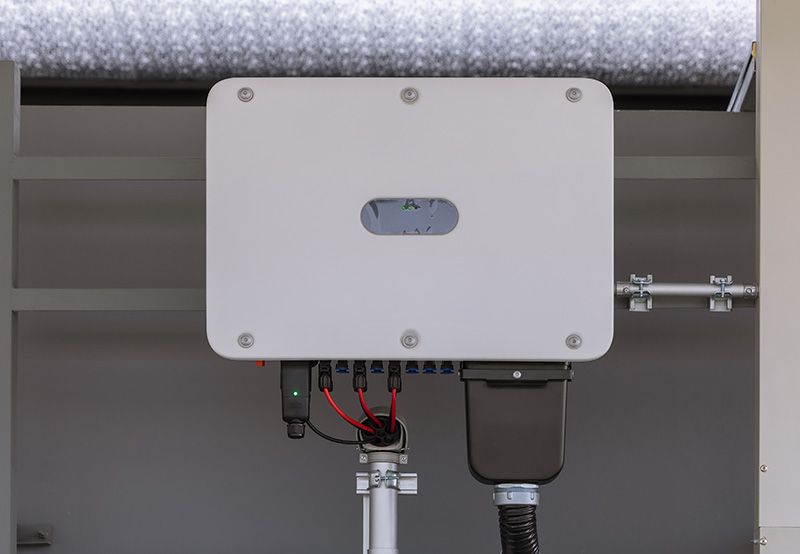
The systems will run at up to 3 kV on the DC side and 1.2 kV on the AC side. The medium-voltage solar inverter used in the project is based on high-blocking silicon carbide semiconductors and was initially developed by Fraunhofer ISE under the earlier MS-Leikra project.

For PVgoesMV, this inverter technology is being adapted specifically for field deployment in solar projects. Two different string configurations are being tested as part of the project.

One configuration uses standard solar modules rated at 1,500 volts with midpoint grounding, while the second uses a full 3 kV string with PV module prototypes developed specifically for the higher-voltage class.

Fraunhofer ISE and its partners aim to use the operational data and practical experience gained during planning, construction, commissioning, and operation to develop a quality assurance and testing framework for medium-voltage solar systems.

Critical Bottlenecks

According to Fraunhofer ISE, the scale of future solar deployment will require very large quantities of raw materials, particularly copper and aluminum used in cables, transformers, and substations.

In a modern solar project with a capacity of about 50 MWp, cable lengths can reach hundreds of kilometers, making conductor material a major cost and supply factor.

Fraunhofer copper supply

The International Energy Agency’s Global Critical Minerals Outlook 2024 indicates that global copper demand is expected to exceed announced supply from 2025 onwards, likely driving higher prices.

As a result, aluminum cables are increasingly being adopted, despite higher processing requirements. Aluminum production is associated with high CO₂ emissions, and aluminum has been classified by the European Union as a critical raw material, further pressuring project economics and sustainability.

Medium-Voltage Operation

Fraunhofer ISE states that increasing the voltage level of solar systems to medium voltage represents a key lever for reducing both resource use and investment costs.

Doubling the system voltage reduces the conductor cross-section by approximately 75%, significantly lowering the amount of copper or aluminum required.

Thinner cables are easier to handle and install, reducing installation time and labor costs. In addition, operating at higher voltage allows the connected load of transformers and substations to be doubled without increasing their physical size.

In large-scale solar parks, this enables halving the number of transformers and substations, resulting in additional savings in materials, capital expenditure, and installation costs.

Fraunhofer ISE project manager Felix Kulenkampff notes that these advantages already occur at relatively low medium-voltage levels and that the additional effort required to design components with sufficient voltage withstand capability remains manageable.

Last July, Fraunhofer ISE researchers developed solar cells based on III-V semiconductors that achieve over 40% efficiency indoors.

In May 2025, scientists at Fraunhofer ISE claimed to have produced silicon heterojunction solar cells with a total silver consumption of 1.4 mg per watt of peak power.

RELATED POSTS

Get the most relevant India solar and clean energy news.

RECENT POSTS