


Daily News Wrap-Up: TOPCon Demand Strains Domestic Solar Cell Supply
Aligning capacity, transmission, and demand key to India’s renewables growth
June 29, 2026

Follow Mercom India on WhatsApp for exclusive updates on clean energy news and insights
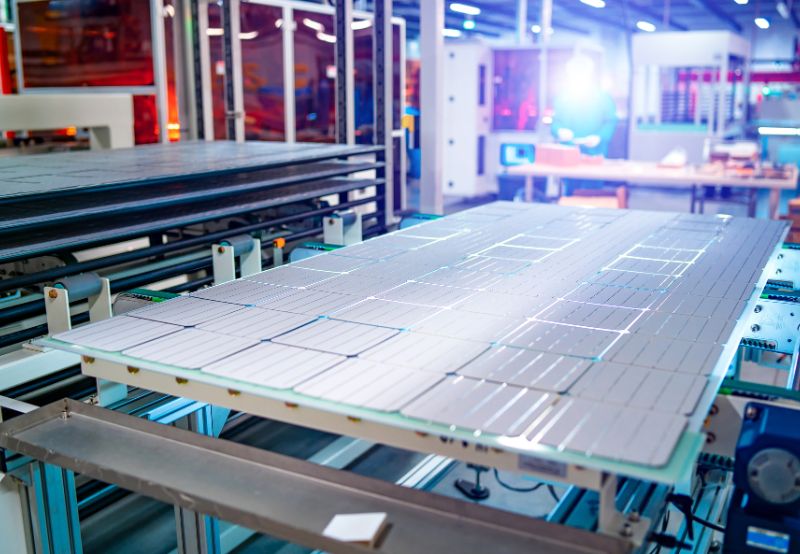
The implementation of the Approved List of Models and Manufacturers List II mandate for solar cells is causing a TOPCon module supply squeeze, with developers, engineering, procurement, and construction contractors, and rooftop installers preferring them for their higher efficiency and output.
Large-scale renewable energy deployment in India is entering a phase where project capacity must be matched by transmission infrastructure, capital availability, supply chain readiness, land access, and operational coordination.
Energy storage systems have emerged as a critical pillar of India’s clean energy transition strategy due to their potential to enhance grid reliability, flexibility, and energy security. As solar and wind installations expand rapidly across the country, energy storage is increasingly seen as a key advantage that could pave the way for the seamless integration of clean energy generation, overcoming intermittency and maintaining a stable power ecosystem.
As India’s power demand rises with the expansion of digital infrastructure and commercial and industrial activity, decentralized energy solutions are gaining prominence as businesses seek reliable, cost-effective, and low-carbon electricity sources.
Mercom India will host the sixth edition of its flagship Mercom India Renewables Summit on July 1 and 2, 2026, at the Hyatt Regency in New Delhi. A major event on India’s renewable energy calendar, the Summit will convene industry leaders, policymakers, investors, developers, manufacturers, and technology providers to share insights and discuss the next phase of the country’s clean energy transition.
The global solar industry is undergoing rapid technological transformation. Emerging cell technologies such as perovskites, heterojunction, back-contact architectures, and tandem cells are driving module efficiencies to new heights and reshaping performance benchmarks across the sector.
India is expanding renewable energy deployment as it works toward its target of 500 GW of non-fossil fuel-based energy capacity by 2030. The country installed 15.3 GW of solar capacity in the first quarter of 2026, its highest quarterly total, according to Mercom India’s Q1 2026 India Solar Market Update Report.
As India’s battery energy storage gains wider adoption, the focus has now shifted to project viability and long-term project execution. Battery storage projects are highly sensitive to technical and commercial assumptions, including degradation rates, round-trip efficiency, dispatch strategy, cycling frequency, and revenue-stacking potential, all of which can affect the project’s bankability.
India’s efforts to fast-track its clean energy transition and plan to achieve 500 MW in non-fossil energy capacity by 2030 hinge heavily on the resilience of its solar manufacturing value chain. The government has been emphasizing the development of a fully self-reliant solar manufacturing ecosystem, from polysilicon, ingots, and wafers to cells and modules.
India is expanding renewable energy deployment as it works toward its target of 500 GW of non-fossil fuel-based energy capacity by 2030. The country installed 15.3 GW of solar capacity in the first quarter of 2026, its highest quarterly total, according to Mercom India’s Q1 2026 India Solar Market Update Report.
The global solar industry is undergoing rapid technological transformation. Emerging cell technologies such as perovskites, heterojunction, back-contact architectures, and tandem cells are driving module efficiencies to new heights and reshaping performance benchmarks across the sector.
The Solar Energy Corporation of India, the sole renewable energy implementing agency, is currently seeking buyers for 8.576 GW of awarded renewable energy capacity across multiple solar, hybrid, and firm renewable energy programs.
Terawatt Infrastructure, a charging infrastructure platform for autonomous and electric vehicle fleets, entered into a five-year senior secured financing facility for up to $150 million, with an option to raise an additional $150 million.
Solar module manufacturer, SWELECT Energy Systems, announced that its wholly owned subsidiary, SWELECT SolarKraft, has signed an agreement to acquire a 49% equity stake in Gridnex Solar Power. Gridnex Solar Power is a wholly owned subsidiary of Apollo Green Energy.
Electric vehicles (EV) play a vital role in reducing carbon emissions and helping the country meet its sustainability targets. By reducing dependence on fossil fuel-based grid power for manufacturing, EV companies can further increase their sustainability footprint and reduce carbon emissions from their operations.
Solar Landscape, a U.S.-based commercial rooftop solar developer, closed an oversubscribed $125 million revolving credit facility led by M&T Bank. Flagstar Bank, Atlantic Union Bank, and Valley Bank participated in the facility.
Germany’s Federal Network Agency (Bundesnetzagentur) awarded 482.4 MW of solar plus storage projects across 27 bids under the country’s innovation auction program. The auction had invited bids for 475 MW. The accepted bid values ranged from €0.0475 (~$0.054)/kWh to €0.0561 (~$0.064)/kWh.
Spearmint Energy, a U.S.-based energy storage company, secured a $325 million expanded debt facility from Nuveen Energy Infrastructure Credit, Elda River Capital Management, Harrison Street Asset Management, and Aiga Capital Partners.
Nama Power and Water Procurement issued a request for qualification to develop 1.5 GW of solar power projects in Oman. The tender includes the 1 GW Adam solar project in the Wilayat of Adam, which will be integrated with a battery energy storage system, and the 500 MW Sinaw solar project in the Wilayat of Sinaw.
AusEnergy Services selected 15 battery energy storage systems totaling 4,205 MW/16,074 MWh under the Capacity Investment Scheme’s Tender 8. The projects will deliver dispatchable capacity to the National Electricity Market.
China’s National Energy Administration issued measures to set minimum targets for renewable energy consumption in critical energy-intensive industries and assign responsibility weights for renewable power consumption to provincial-level administrative regions.


Mercom Staff
More articles from Mercom Staff.