Daily News Wrap-Up: MNRE Asks States to Publish Spare Transmission Capacity

How PURE Energy is redefining battery storage

December 17, 2025

thumbnail

Follow Mercom India on WhatsApp for exclusive updates on clean energy news and insights


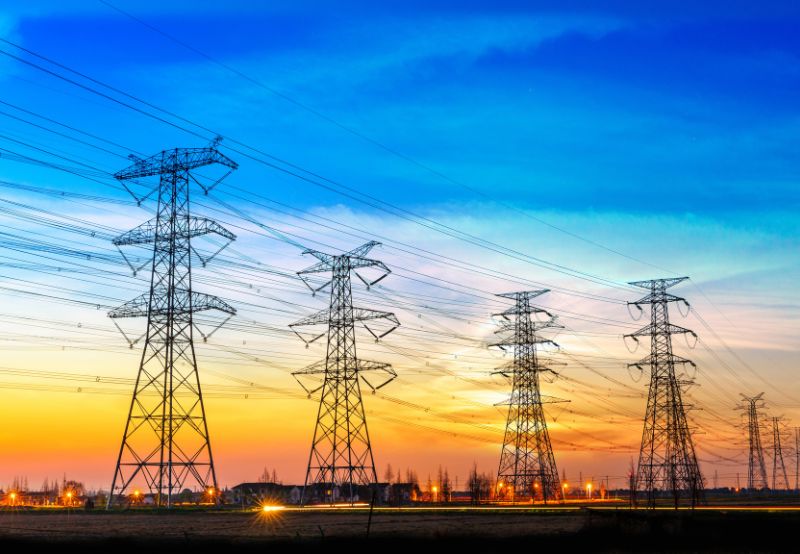
The Ministry of New and Renewable Energy (MNRE) asked state power transmission utilities to publish details of spare transmission capacity at regular intervals in the public domain. Publishing the spare transmission capacity available at the states’ 400 kV/220 kV/132 kV substations will improve transparency and ease of doing business. It will also enable renewable energy developers to plan their projects effectively.

India’s commercial and industrial sector is rapidly adopting battery energy storage systems (BESS) for power arbitrage and greater grid independence, even as residential uptake accelerates. In an exclusive interview with Mercom India, Nishanth Dongari, Founder and Managing Director at PURE Energy, discussed his company’s offerings, the BESS market in India, and the regulatory and policy challenges faced by the energy storage segment.

MNRE issued the revised Approved List of Models and Manufacturers List-II for solar cells, raising the total enlisted capacity to 23.7 GW. The Ministry added two new entries from Waaree Energies, with a cumulative solar cell capacity of 5.2 GW, at its manufacturing facility in Gujarat.

Robotic solar module cleaning equipment supplier, LEAPTING, signed an agreement with Adani Solar to provide its Automatic G1 Cleaning Robots and integrated intelligent cleaning service systems for Adani Group’s 2 GW solar project. LEAPTING said its G1 cleaning robots offer multiple features, including fully automatic, unmanned operation, water-free dry-cleaning technology, optimization for tracker-based solar plants, high cleaning efficiency, low operating and maintenance costs, and operation in dusty and high-temperature environments.

Tata Power announced plans to raise ₹20 billion (~$220.53 million) through private placement of unsecured, senior, redeemable, rated, listed, taxable, non-cumulative non-convertible debentures (NCDs). The company has proposed to issue 200,000 NCDs of a face value of ₹100,000 (~$1,102.68) at a fixed rate, on a coupon basis, with bidding on the BSE electronic bidding platform. The NCDs will be tentatively allotted on December 19, 2025.

Power Grid Corporation of India received a letter of intent to establish a 765 kV interstate transmission system project connecting the southern and eastern grids. The project involves the establishment of a 765 kV interstate transmission system in Angul, Odisha, and Srikakulam, Andhra Pradesh, along with associated reactive power compensation infrastructure.

SEG Solar, a California-based solar module manufacturer, commenced the build-out of a 3 GW ingot and wafer manufacturing facility in Batang Regency, Indonesia. The facility will be expanded to enable the manufacture of 5 GW of ingots and wafers. The company will invest approximately $80 million in the project.

NLC India Renewables, a subsidiary of NLC India, signed a joint venture (JV) agreement with PTC India to develop renewable energy projects with a capacity of 2 GW. This follows a memorandum of understanding entered into by the two companies in September. The JV will undertake the development, operation, and maintenance of renewable projects, including solar, wind, hydro, BESS, green ammonia, and other emerging green technologies. It aims to develop green energy capacity of up to 2,000 MW in phases. In the first phase, the joint venture will aim for a capacity of 500 MW.

SJVN Green Energy commissioned 100.56 MW of its 1 GW Bikaner solar project in Rajasthan, bringing its total operational capacity to 830.7 MW. In October, SJVN commissioned a capacity of 128.88 MW. During the second quarter of the financial year 2026, SJVN also commenced the construction of a 200 MW solar project, part of the Omkareshwar Solar Project Phase 17 in the Khavda Solar Park, Gujarat.

The Canadian International Trade Tribunal initiated an interim review of its March 25, 2021, order on dumping and subsidy duties on specific solar components from China, at the request of the Canada-based solar solutions company, Kings Solar Solutions. The sanctioned components included crystalline silicon solar cells, including laminates shipped or packaged with module components. They also comprised thin-film solar products produced from amorphous silicon, cadmium telluride, or copper indium gallium selenide.

Overall solar module median pricing in the U.S. increased by 14% or $0.035/W from January to November, according to Anza Renewables’ Q4 2025 Quarterly Pricing & Domestic Content Report. The report highlighted that rapid and monumental policy changes drove the rise in module prices. The module price was $0.25/W at the start of the year, rising to $0.28/W in May. According to the report, a tariff reprieve in June brought the prices back down to $0.265/W.

France’s Ministry of Energy Transition awarded a combined capacity of 507.7 MW across 36 solar projects under the fourth round of its technology-neutral renewables tender. The tender was floated for a total capacity of 500 MW. Solar, including agrivoltaic projects, accounted for the entire awarded capacity. Individual project sizes ranged from just under 1 MW to 44 MW, while the weighted-average price reached €0.074 (~$0.08702)/kWh.

RELATED POSTS

Get the most relevant India solar and clean energy news.

RECENT POSTS