


Daily News Wrap-Up: APTRANSCO Announces Winners of 2 GWh Storage Auction
MNRE seeks comments on draft to raise solar module efficiency threshold
December 1, 2025

Follow Mercom India on WhatsApp for exclusive updates on clean energy news and insights
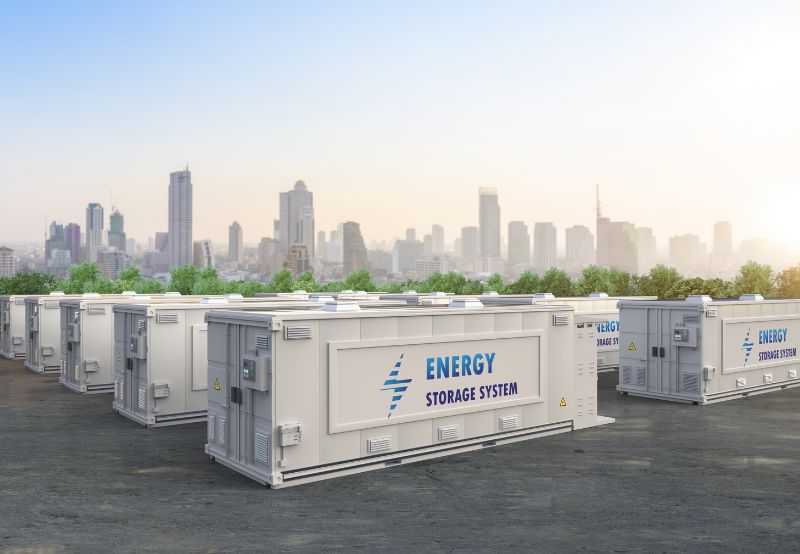
Six companies won Transmission Corporation of Andhra Pradesh’s (APTRANSCO) auction to develop 1,000 MW/2,000 MWh standalone battery energy storage systems in the state. Bondada Engineering won 225 MW for the project at Hindupur substation, and Power Grid of India (PGCIL) won 150 MW for the project at Kalikiri substation, both at a tariff of ₹164,000 (~$1,833.22)/MW/month. Ecoren won 275 MW at a tariff of ₹150,000 (~$1,676.73)/MW/month for the project at Talaricheruvu substation and won 225 MW at a tariff of ₹165,000 (~$1,844.4)/MW/month for the project at Pampanuruthanda substation. Bhagwati Group won 75 MW at a tariff of ₹150,000 (~$1,676.73)/MW/month for the project at Maradam substation.
The Ministry of New and Renewable Energy (MNRE) invited comments on its draft order for expanding the threshold solar module efficiencies for enlistment in the Approved List of Models and Manufacturers (ALMM) List-I. Stakeholders must submit their feedback by December 27, 2025. The draft proposes increasing the minimum module efficiency threshold for the enlistment of solar modules in ALMM List-I in utility-scale, rooftop, and solar pumping, off-grid distributed renewable energy projects with less than 200 W capacity, and in other applications. MNRE proposes to expand the threshold for utility-scale projects with modules using common silicon technology from 20% to 21% from January 1, 2027, and to 21.5% from January 1, 2028.
Transmission sector stakeholders decided to adopt new measures to lower the high failure rate of electricity distribution transformers, achieve uniformity in specifications across utilities and manufacturers, and reduce replacement delays. At a recent meeting of the standardization cell convened by the Central Electricity Authority, stakeholders flagged moisture ingress, poor sealing, and non-uniform components as major reasons for transformer breakdowns. It was announced in the meeting that the national distribution transformer failure rate averages around 10% or nearly 1.3 million failures annually. Kerala had a failure rate of 1.9%, while some northern states exceeded 20%.
In an exclusive interview with Mercom, Manish Gupta, Chairman at INA Solar, shared his insights about the rapidly changing landscape of solar manufacturing and his company’s plans to meet the ever-growing demand of the Indian solar industry. What is INA Solar’s current solar module manufacturing capacity? What are the company’s plans for solar cell manufacturing? At INA Solar, we have always believed that innovation, quality, and scale are the pillars that define a world-class solar manufacturing company. Over the years, we have strategically built our manufacturing capabilities to cater to both India’s rapidly growing renewable energy requirements and the global solar market.
The Odisha Electricity Regulatory Commission amended its net metering and bi-directional metering framework for rooftop solar systems, aligning the state regulations with recent Ministry of New and Renewable Energy guidelines. According to the Commission, the amendments were necessary to reflect advancements in rooftop solar technology, the rising adoption of solar-plus-storage systems, and updated national monitoring protocols. The amendment introduces multiple changes, most notably the formal inclusion of hybrid inverters, a category of bi-directional inverters capable of operating with both solar modules and energy storage systems. Under the new Clause 2(f), a hybrid inverter is defined as a device that manages power flow between solar generation, storage, consumer load, and the grid.
The Central Mine Planning and Design Institute issued a tender to set up 1,545 kW of grid-connected solar projects in the Central Coalfields project areas in Jharkhand. These projects will comprise solar trees and rooftop systems, with DC overloading of at least 20%, amounting to a minimum capacity of 1,854.06 kW. Bids must be submitted by December 18, 2025. Bids will be opened on December 19. The scope of work entails the design, engineering, procurement, construction, erection, testing, and commissioning of the solar projects. It also involves providing operation and maintenance services for 10 years. Selected bidders must conduct the civil, structural, and electrical works for the projects.
PFC Consulting invited bids to establish an intrastate transmission system involving a 765/400/220 kV air-insulated substation (AIS) at Dolvi in the Raigad District of Maharashtra. AIS Dolvi has been planned to facilitate a reliable power supply of 3,000 MW to bulk power consumers, catering to the production of green hydrogen and its derivatives, and to renewable energy evacuation. Bids must be submitted by February 3, 2026. Bids will be opened on the same day. The scope of work entails establishing a 765/400/220 kV AIS Dolvi substation with 5×1500 MVA, 765/400 kV ICTs and 3×500 MVA, 400/220 kV ICTs, along with 1×240 MVAr, 765 kV bus reactor and 1×125 MVAr, 420 kV bus reactor, including all associated 765 kV, 400 kV and 220 kV switchyard bays, bus coupler/transfer bays, and mandated future space provisions.
Nitesh Powertech won South Eastern Coalfields’ (SECL) auction for the engineering, procurement, and construction of 1,160 kW grid-connected rooftop solar systems on 12 buildings identified in Chhattisgarh and Madhya Pradesh. The projects will be installed at SECL’s GM offices in Sohagpur, Bisrampur, Baikunthpur, Bhatgaon, Dipka, Johilla, Raigarh, CWS Korba, and Chirimiri. Two projects will be installed at SECL headquarters, and one at its Central Excavation Workshop. The tender was issued in February 2025. The total contract value is ₹53.12 million (~$593,610.6). The company must design, engineer, fabricate, construct, erect, install, test, and commission the rooftop solar systems.
Mumbai-based electric vehicle solutions company Neuron Energy raised ₹310 million (~$3.47 million) in a pre-series B round to expand its battery manufacturing capacity. The funding was led by Equanimity Ventures, Rajiv Dadlani Group, Thackersay Family Office, Chona Family Office, along with participation from some reputed family offices and high-net-worth individual investors. The funding will be utilized to expand Neuron Energy’s battery manufacturing capacity to 3 GWh. It will also be used to establish a fully automated facility for electric four-wheelers and buses at Chakan, Pune, The funding will help strengthen the company’s research and development capabilities and accelerate its domestic growth.
Using a 50 kW rooftop solar system, the Tata Institute of Fundamental Research (TIFR) in Colaba, Mumbai, is saving ₹852,852 (~$9,548.45) annually on power costs. TIFR is a deemed university that awards master’s and doctoral degrees. Taking the sustainable route and reducing electricity costs, TIFR decided to utilize the rooftop space at its campus to set a 50 KW rooftop solar system in August this year. The system was commissioned in September. The institute’s decision to shift to solar also stems from the grid tariff reaching as high as ₹14 (~$0.156)/kWh. Mumbai-based VEMCO Solar, the renewable energy arm of Vijay Engineering & Machinery Company, set up the rooftop system.
Industrial, electronic, and specialty gas manufacturer Inox Air Products entered into long-term partnerships with Grew Energy and ReNew Energy Global to supply ultra-high-purity nitrogen for their upcoming solar cell manufacturing facilities. Inox Air will supply nitrogen to ReNew’s 4 GW TOPCon solar cell manufacturing facility at Dholera, Gujarat, and to Grew Energy’s 3 GW solar cell manufacturing facility at Narmadapuram, Madhya Pradesh. Grew’s 3 GW solar manufacturing facility is being developed with an investment of ₹30 billion (~$345 million) and is expected to be operational by 2026.
Solar module manufacturer Waaree Energies secured a 350 MW order from AMPIN Energy Transition to supply high-efficiency G12R TOPCon modules for AMPIN’s upcoming solar projects across India. Waaree Energies is expected to complete the deliveries by March 2026. The company’s manufacturing capacity comprises approximately 16.7 GW of solar modules and 5.4 GW of solar cells. It has an order book of roughly 24 GW, worth approximately ₹470 billion (~$5.35 billion). Recently, Waaree Energies received an order to supply 360 MW of modules from an undisclosed customer who develops, owns, and operates utility-scale solar and energy storage projects.
Premier-Green Aluminium, a joint venture company of Premier Energies, aims to raise ₹600 million (~$6.7 million) in tranches to implement an aluminum frame production facility to support its solar module manufacturing. The company has issued 25,000 equity shares with a face value of ₹10 (~$0.11) each, amounting to ₹250,000 (~$2,793.61) to its JV partner, Nuevosol Energy. After this allotment, Premier Energies will hold 80% of the JV company’s share capital, with Nuevosol holding the remaining 20%. Premier-Green Aluminium was formed to manufacture solar module frames from aluminum and its alloys.
Australia invited bids to set up 4 GW /16 GWh of dispatchable energy storage capacity in the National Electricity Market. Bids must be submitted by February 6, 2026. Successful bids will be announced in June 2026. In contrast to the Capacity Investment Scheme tenders, which focus purely on renewable generation, this tender is specifically for dispatchable storage projects. Bidders must propose projects that store electricity by importing power from the NEM grid, an eligible renewable energy source under the Renewable Energy (Electricity) Act, or a mix of both. Projects must be located in participating NEM jurisdictions. Standalone projects must offer at least 30 MW of registered capacity and demonstrate a minimum storage duration of two hours at commercial operation.


Mercom Staff
More articles from Mercom Staff.