

C&I Power Procurement Shifts to Open Access and Rooftop Solar Amid Rising Tariffs
Industries should consider optimizing rooftop solar and then opt for open access

Follow Mercom India on WhatsApp for exclusive updates on clean energy news and insights
Rising electricity tariffs and evolving regulations are pushing India’s commercial and industrial (C&I) consumers to rethink how they procure power. Businesses are increasingly turning to renewable energy sources to meet their power requirements.
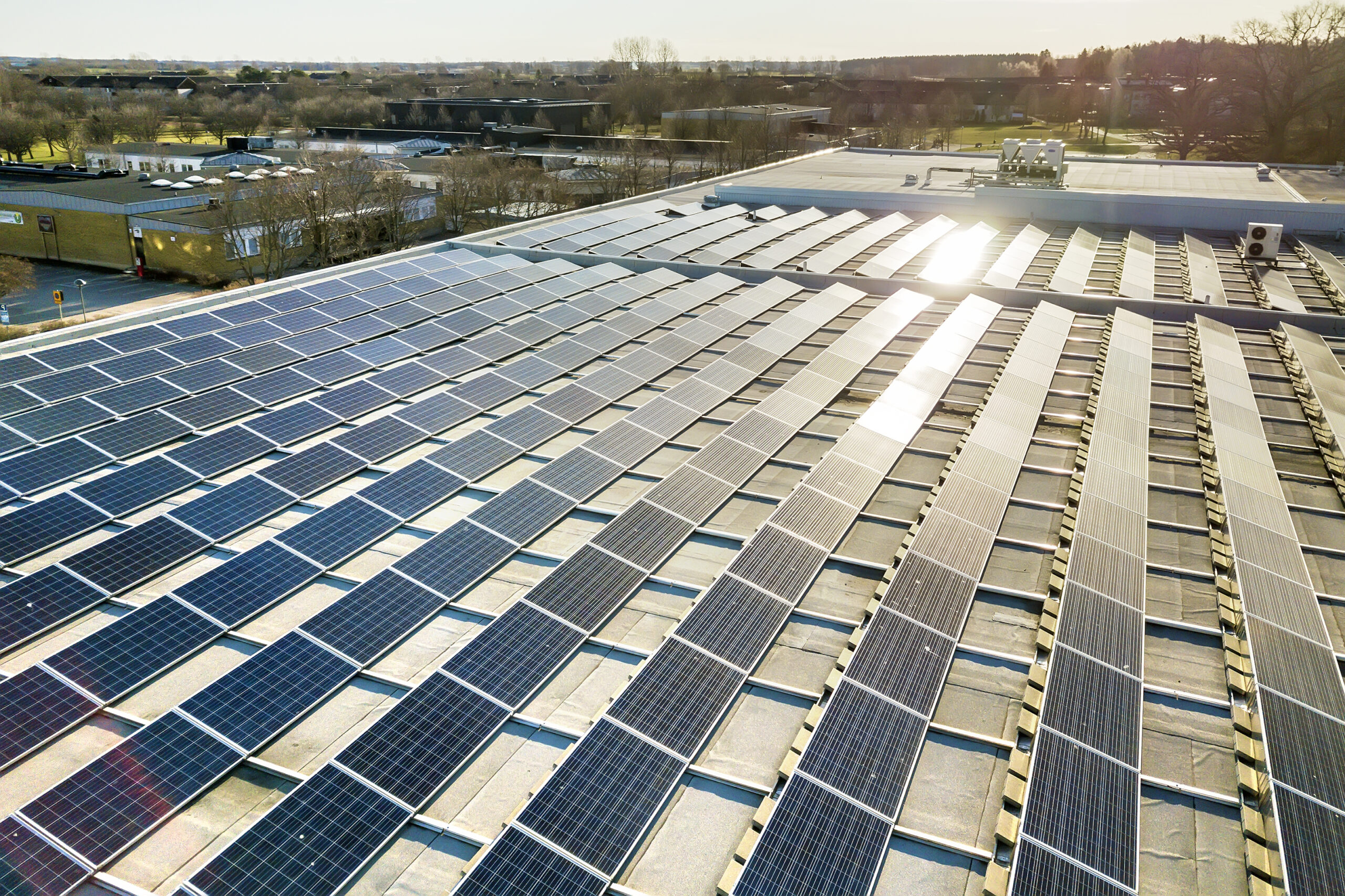
Rooftop solar, green energy open access, supported by battery energy storage solutions as required, can significantly reduce electricity costs while improving the availability of reliable power.
According to Jayant Mhetar, Chief Executive Officer at ZTRIC India, commercial consumers paying electricity tariffs of ₹15 (~$0.16)/kWh to ₹20 (~$0.22)/kWh can recover their rooftop solar investments in as few as 12 to 18 months. Industrial consumers with lower tariffs typically have payback periods of 2 to 3 years.
Rooftop solar, however, has a few challenges. Limited roof space often prevents industries from meeting their full power demand solely through solar installations. This is where green open access regulations are proving transformative.
Recent policy changes allow even low-tension and high-tension consumers with loads above 100 kW to procure renewable power through open access—something that was earlier viable only for large, multi-megawatt consumers.
There is a general consensus that industries should first optimize rooftop solar, then procure green energy through open access to cover residual demand.
Rahul Mahakaniya, Chief Marketing Officer at Soleos Energy, stressed the importance of choosing the right model for open access.
While project execution typically takes 4 to 6 months, decision-making often takes longer as companies evaluate risks, savings, and policy frameworks. “Open access is no longer just a sustainability decision—it’s a financial strategy,” he said.
Contrary to common perception, open access power purchase agreements (PPAs) can be simpler and more flexible. Since power is supplied virtually from a solar park, companies can relocate operations without stranding assets on a roof.
Maharashtra at the Forefront
Maharashtra is among the leading states in renewable energy adoption. As of September 2025, the state has nearly 4.8 GW of open-access solar capacity installed, accounting for over 17% of India’s total open-access installations and ranking second nationally in both rooftop and open-access solar.
Despite recent regulatory uncertainty, Maharashtra continues to maintain a strong pipeline of open access and hybrid renewable projects, creating opportunities for industries seeking cost-efficient, cleaner power.
Battery Storage: From Grid Stability to Reliability
Battery energy storage systems (BESS) have emerged as a key element. Although current economic conditions limit direct savings for many industrial consumers, batteries are increasingly critical to grid stability and reliability.
“Batteries are growing in popularity not because of savings alone, but because the grid needs them,” said Mahakaniya, noting that states are already reducing banking provisions and considering battery mandates in upcoming tariff orders.
For commercial consumers and data centers with high tariffs or critical uptime requirements, batteries can already be viable, especially when replacing or supplementing diesel generators.
There is a wide cost difference between battery systems and diesel generators. Battery-backed power is available at ₹6.5 (~$0.07)-₹10 (~$0.11)/kWh, whereas operating diesel generation costs around ₹18 (~$0.19)-₹24 (~$0.27)/kWh.
While batteries may not fully replace diesel sets, they can significantly reduce diesel dependence and operating costs, particularly for short-duration outages.
Why Waiting Rarely Pays Off
Experts also caution against delaying renewable investments in anticipation of lower prices.
“Solar prices have largely stabilized,” said Mahakaniya. “Waiting a year to save marginal capex often results in far greater losses.”
The advice to C&I consumers is clear: treat renewable energy as a financial investment, not just a green initiative.
At Mercom India’s C&I Clean Energy Meet in Nashik, experts highlighted that rising electricity tariffs and evolving regulations are making renewable energy a strategic financial choice for C&I consumers. The main takeaway was a clear adoption strategy: prioritize rooftop solar, then utilize green open access to cover residual demand, as recent policy adjustments have made open access practical even for smaller consumers.
Speakers also emphasized that open-access PPAs, when structured as balanced, long-term agreements, can offer flexibility, predictable savings, and greater scalability than rooftop-only
solutions. They added that battery energy storage is expected to become an integral part of the ecosystem—driven primarily by grid stability and reliability rather than immediate savings—while already offering cost advantages over diesel generators for certain users.
Above all, the discussion emphasized that delaying renewable investments in anticipation of lower prices rarely pays off, and treating clean power procurement as a financial investment and acting early delivers the greatest savings.
The next Mercom India C&I Clean Energy Meet event will be held in Coimbatore on February 5, 2026.


Rakesh Ranjan
More articles from Rakesh Ranjan.