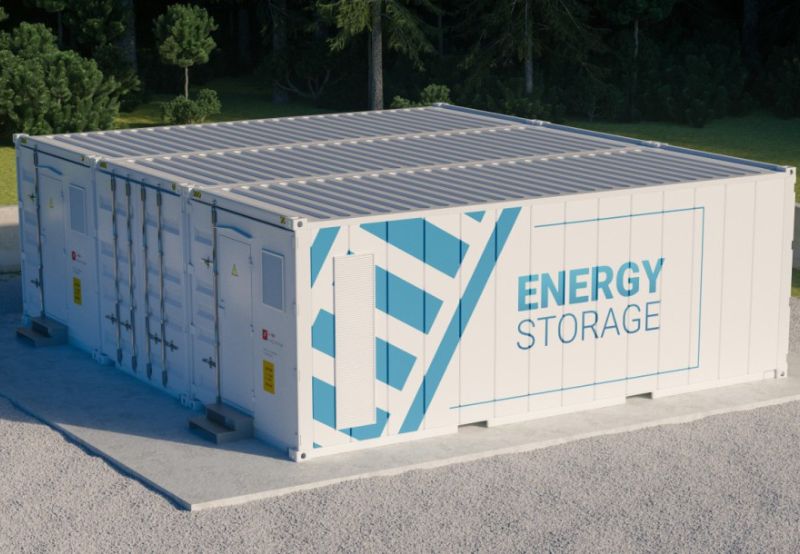
Battery Storage Costs Dropped to Record Low in 2025: BNEF

The LCOE for a four-hour energy storage system stood below $100/MWh in six markets

thumbnail

Follow Mercom India on WhatsApp for exclusive updates on clean energy news and insights


The cost of battery storage projects reached all-time new lows in 2025, even as the cost of other renewables saw an increase, according to BloombergNEF’s (BNEF) Levelized Cost of Electricity (LCOE) 2026 report.

The report highlighted that the global benchmark cost for a four-hour battery project fell 27% year-over-year to $78/MWh in 2025, a significant drop from battery storage prices in 2009.

BNEF said that the LCOE for a four-hour energy storage system stood below $100/MWh in six markets.

The report said that lower battery pack prices, increased competition among manufacturers, and improved system designs contributed to the rapid decline in battery storage projects.

Declining battery storage costs accelerated the buildout of co-located renewable projects. This was underscored by developers adding 87 GW of combined solar and storage in 2025, delivering power at an average of $57/MWh.

By contrast, the benchmark cost of a typical fixed-axis solar farm increased by 6% from 2025 to $39/MWh, while onshore wind reached $40/MWh and offshore wind climbed to $100/MWh globally.

Reversing the downward trend in solar, onshore wind, and offshore wind costs over the last few years, costs for these renewables rose in 2025.

The report attributed this uptrend in the cost of renewables, excluding battery storage projects, to a combination of supply chain constraints, reduced resource availability, and market reforms in mainland China.

Amar Vasdev, lead author of the report and senior energy economics associate at BloombergNEF, said that the lower cost of battery storage projects, driven by manufacturing overcapacity from the electric vehicle market and better system designs, transformed the economics of large energy storage projects.

BNEF highlighted that co-located solar and four-hour energy storage systems can meet a substantial share of data center electricity demand at a lower cost than gas, with the competitiveness of such projects improving in regions like California and parts of Texas as solar output expands and storage prices fall.

However, BNEF expects innovation and competition in the sector to drive down the cost of clean energy technology.

By 2035, the report forecasts LCOE reductions of 30% for solar, 25% for battery storage, 23% for onshore wind, and 20% for offshore wind.

Increase in Thermal Costs

While battery storage costs dropped in 2025, thermal power generation costs increased.

The global LCOE for combined-cycle gas turbines rose 16% to $102/MWh, reaching an all-time high. The report said that a jump in equipment prices impacted the cost of developing new-build gas and coal plants.

It also noted that the growing development of data centers drove the elevated demand for gas turbines. BNEF expects gas plant costs to remain expensive for the foreseeable future.

Recent surges in gas turbine demand, driven heavily by data center expansion, have doubled U.S. turbine capital expenditure in just two years and pushed combined-cycle gas turbine costs to record levels, well above global averages.

The report noted that challenges in gas turbine supply chains and grid queues may also create opportunities for quickly deployable clean power technologies.

Vasdev said that new solar farms already undercut new coal or gas generation in almost all Asia-Pacific markets, and wind has displaced gas as the cheapest source of new-build generation in the U.S. and Canada.

He added that solar consistently beats fossil-fuel alternatives in Southern Europe, and that wind beats them in Northern Europe.

Drop in Offshore Wind Costs Outside China

While the global benchmark rose by 2%, onshore wind projects outside mainland China saw a 4% decline in costs in 2025. However, the report said that global benchmark prices for wind projects rose following recent Chinese projects built in areas with lower wind speeds, which lifted costs.

The report said that tight offshore wind supply chains pushed costs higher in nearly all major markets, with global costs up 12%.

In the UK in particular, the cost of recently financed offshore wind projects stood 69% higher than five years ago, with BNEF expecting costs to remain elevated until at least 2030.

In the U.S., wind power regained its position as the cheapest option for new electricity generation, overtaking gas-fired power generation for the first time since 2023.

According to an International Energy Agency report, the global lithium-ion battery market exceeded $150 billion in 2025, up 20% from 2024. The report noted that declining battery costs and the expansion of applications continue to drive rapid demand growth across multiple sectors.

The demand for Li-ion batteries crossed 1 TWh in 2024 and reached nearly 1.6 TWh in 2025, according to a McKinsey & Company report.

RELATED POSTS

Get the most relevant India solar and clean energy news.

RECENT POSTS