Strong Domestic Policy Support, Scale May Moderate India BESS Prices: Interview
Kalpa Power aims to scale up to 5 GW by 2030
February 20, 2026
Follow Mercom India on WhatsApp for exclusive updates on clean energy news and insights
Backed by a robust viability gap funding (VGF) program and declining prices, India is witnessing significant growth in the deployment of battery energy storage systems (BESS). Under the new roadmap for renewables, the focus is not only on meeting targets but also on ensuring grid stability and the reliable integration of renewables.
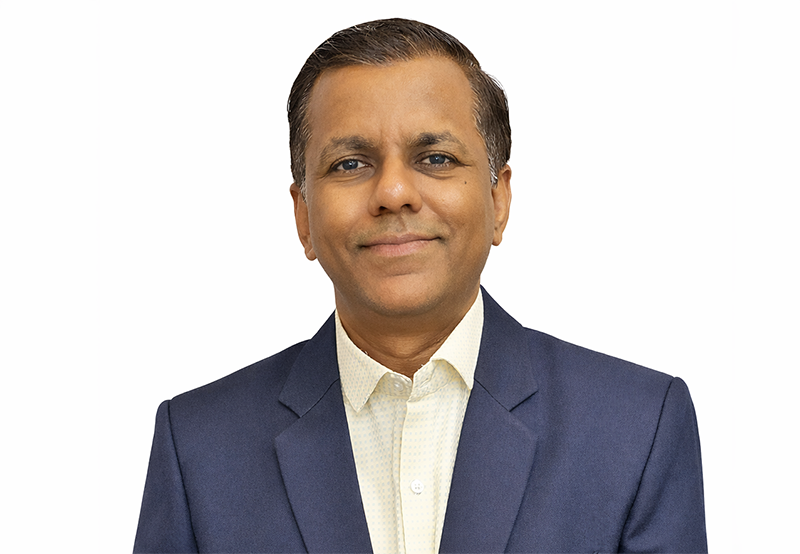
In an exclusive interview with Mercom India, Kamlesh Kataria, COO at Kalpa Power, spoke about the evolution of BESS in India, the strategic investments in solar by the commercial and industrial (C&I) sector, and the company’s 2030 target.
Could you give us an overview of Kalpa Power, including your core operations and renewable energy offerings?
Kalpa Power is a leading energy management company focused on delivering reliable, affordable, and sustainable energy solutions to India’s commercial and industrial sector. Our expertise lies in providing end-to-end solutions—from design and engineering to EPC execution, asset management, and long-term energy optimization.
We currently manage over 490 MWp of contracted renewable capacity and deliver more than 1.25 million units of clean energy daily to C&I consumers across India. Our portfolio includes open-access renewable parks, rooftop solar installations, high-voltage and extra-high-voltage (EHV) power infrastructure, and energy storage solutions.
Within the C&I segment, are you seeing stronger demand today for open access projects or rooftop solar?
Demand is growing across both rooftop and open-access segments, though open access has gained stronger momentum since 2021. Rooftop solar still holds significant untapped potential, driven by on-site generation benefits such as zero transmission losses and easier approvals, especially across warehouses, logistics parks, and industrial facilities with available rooftop or adjacent land.
However, open access has emerged as the primary growth driver, driven by improved regulatory clarity, offering scale, long-term tariff visibility, and portfolio optimisation. In states like Maharashtra, the ability to combine rooftop solar with open access is further enabling hybrid energy strategies. Ultimately, state-level regulatory frameworks play a decisive role in adoption patterns.
Are C&I customers increasingly prioritizing energy resilience and decarbonization, in addition to cost savings, as drivers of renewable adoption?
Yes, very clearly.
India’s energy transition has progressed in phases—first addressing shortages, then focusing on reliability. Corporate environmental, societal, and governmental commitments, renewable purchase obligations, production-linked incentives, and emerging carbon market mechanisms are influencing decision-making for the C&I sector.
Today, renewable adoption is driven not only by cost savings but also by resilience, compliance, and long-term energy certainty aligned with business growth. Efficient power management has become as important as clean power generation.
With expected upward pressure on BESS prices due to policy shifts in China, how do you see the energy storage market evolving in India over the next 12–24 months?
In the near term, global policy shifts, particularly in China, may exert some upward pressure on battery cell prices. However, we expect this to be moderated in India by strong domestic policy support and growing market scale.
The Government of India’s ₹54 billion (~$592.57 million) Viability Gap Funding allocation for 30 GWh of BESS capacity demonstrates a continued commitment to storage deployment. Over the next 12–24 months, we expect the market to evolve from standalone battery installations to integrated, application-driven solutions.
Peak demand management, renewable firming, ancillary services, and hybrid solar-storage systems will drive value creation. As a result, we anticipate a healthy market correction with the focus shifting from purely “lowest cost” bids to bankable, reliable, and operationally sustainable storage projects.
Following MERC’s decision to allow the simultaneous use of open access and rooftop solar under the net metering framework, have you seen increased C&I interest in hybrid configurations?
Yes, we are seeing a clear increase in C&I interest in hybrid configurations following the Maharashtra Electricity Regulatory Commission’s (MERC) decision. Many industrial consumers already have rooftop solar installed, often sized years ago to meet only a portion of their demand. As production scales up and energy requirements rise, rooftops alone are no longer sufficient.
The regulatory clarity around simultaneous use has facilitated the layering of open access renewable power on top of existing rooftop systems. This allows consumers to optimize energy sourcing without being constrained by rooftop limitations.
In Budget 2026, the exemption on basic customs duty for capital goods used in manufacturing lithium-ion cells for BESS applications was extended. How do you expect this to impact the economics of solar-plus-storage projects and tariffs in upcoming renewable auctions?
The extension of the basic customs duty exemption for capital goods used in lithium-ion cell manufacturing reinforces the government’s long-term commitment to scaling energy storage as a core component of India’s clean energy transition. Along with sustained allocations for solar and storage deployment, this measure provides greater cost visibility and confidence for long-term capital investment in solar-plus-storage projects.
From an auction and tariff perspective, such policy signals are important because they improve project bankability and reduce uncertainty around future cost trajectories. As the market matures, tariffs will increasingly reflect system-level optimization rather than just equipment pricing.
At the C&I level, we are implementing a 2 MWp solar + 7 MWh BESS hybrid project in Pune for a European multinational, highlighting the growing commercial viability of reliable solar-plus-storage solutions beyond tariff-driven decisions.
With renewables now accounting for a majority share of India’s power generation, how critical is BESS for grid stability, and what gaps still need to be addressed for large-scale deployment?
BESS is what converts renewable capacity into dependable energy.
However, large-scale deployment is still constrained by confidence and consistency, not just cost. For many C&I consumers, storage is a relatively new asset class. There is a natural trust gap; customers want proof that BESS will perform as promised, integrate seamlessly with their operations, and deliver measurable value over its lifecycle.
Policy alignment will be equally important going forward. While central-level support for storage is strengthening, state-level frameworks need to evolve at a similar pace. States like Rajasthan, for instance, are beginning to recognize storage as an enabler of renewable evacuation and grid reliability rather than just generation support. Clear guidelines on storage participation in grid services, banking, and hybrid configurations will accelerate adoption.
Transmission connectivity and land acquisition remain major execution bottlenecks. How does Kalpa Power navigate these challenges and mitigate project risk?
Transmission connectivity and land acquisition are often treated as external risks in renewable projects. At Kalpa Power, we treat them as design variables rather than execution constraints. This shift in mindset fundamentally changes how risk is managed.
Our project development approach begins with co-locating land, assessing evacuation feasibility, and structuring commercial arrangements. Land parcels are evaluated not only for title clarity and statutory readiness, but also for proximity to substations, realistic bay availability, and long-term grid stability. This prevents situations where projects are technically ready but commercially stranded due to connectivity delays.
On the transmission side, we go beyond basic connectivity approvals. Detailed load-flow assessments, substation capacity checks, and phased commissioning plans are built into the project blueprint. This allows us to align construction timelines with actual grid readiness rather than assumed availability.
What further differentiates Kalpa is the way execution risk is continuously monitored. We have made focused investments in enterprise resource planning-integrated workflows and real-time management information systems dashboards, giving leadership and project teams live visibility into land clearances, transmission milestones, approvals, and on-ground progress. This enables early intervention and data-backed decision-making rather than reactive firefighting.
Where do you see the next growth opportunities for Kalpa Power in 2026 and beyond?
Our primary priority is scaling from 400 MW to 5 GW by 2030. This isn’t just a number; it’s a defined execution plan with a blueprint laid down.
We are investing in standardizing engineering, optimizing internal processes, and building leadership depth and a robust digital infrastructure to deliver gigawatt-scale projects with repeatability.
Looking ahead, our innovation roadmap focuses on integrated energy management solutions, specifically BESS, EHV transmission infrastructure, and international renewable energy certificates. By combining high-velocity execution with grid reliability, Kalpa Power is derisking the energy shift and ensuring renewable energy becomes the predictable and dominant force in India’s power mix.
This interview was sponsored by Kalpa Power