Solar Share in India’s Renewable Energy Capacity Rises to 55% in Q1 2026
Renewables accounted for about 52% of the overall power capacity mix
April 30, 2026
Follow Mercom India on WhatsApp for exclusive updates on clean energy news and insights
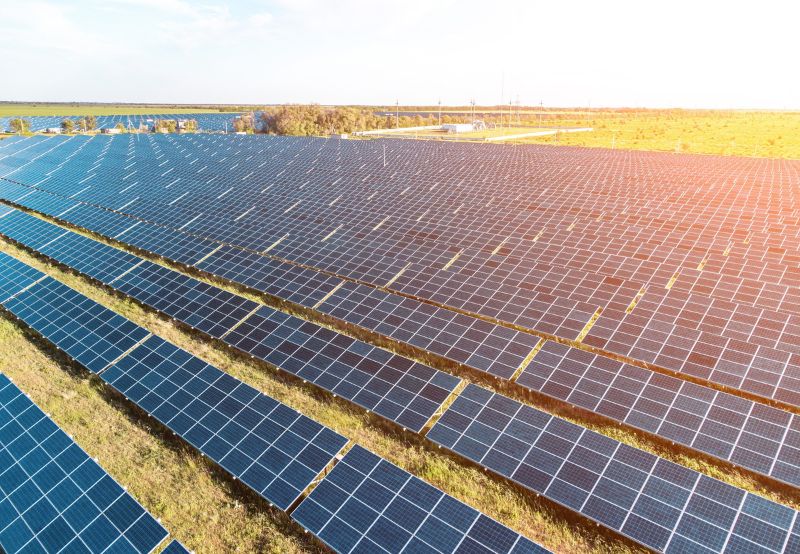
Solar power accounted for 28.4% of total installed power capacity and 55% of total installed renewable energy capacity as of March 2026, up from 26.5% and 52.7%, respectively, in the previous quarter.
Solar project installations have increased by about 12% quarter-over-quarter (QoQ) and 46% year-over-year (YoY).
India’s renewable energy capacity, including large hydroelectric projects, made up 51.7% of the country’s cumulative power capacity, with 276.5 GW installed at the end of the first quarter of 2026, according to data from the Central Electricity Authority (CEA), the Ministry of New and Renewable Energy (MNRE), and Mercom’s India Solar Project Tracker.
The share of renewable energy in the power mix was 50.2% of total installed capacity in Q4 2025 and 46.1% in Q1 2025.
India generated approximately 52.2 billion units (BU) of solar power in Q1 2026, a 24.3% YoY increase. On a QoQ basis, generation increased by about 27% from 41.2 BU to 52.2 BU.
Large hydro, with a total installed capacity of 51.4 GW, accounted for nearly 9.6% of the total installed power capacity as of March 2026. There was a significant addition to hydropower capacity, with NHPC commissioning the Subansiri Lower Unit-3 and Unit-1 in Q1 2026, adding a total of 500 MW of dispatchable capacity.
Wind capacity stood at 56.1 GW at the end of Q1 2026, representing 10.5% of total installed capacity and contributing over 20% of total renewable energy capacity.
Biomass and small hydro contributed 2% and 1% to the total installed power capacity as of March 2026, respectively.
Energy from conventional sources
At the end of Q1 2026, the country’s installed conventional power capacity stood at 258.1 GW, accounting for 48.3% of all installations. This represents a decrease from 49.8% in the previous quarter and 53.9% in the same period last year.
The share from thermal sources is dominated by coal (41.5%), followed by gas (3.8%), nuclear (1.6%), lignite (1.2%), and diesel (0.11%).
Telangana, Tamil Nadu, and West Bengal added 2.26 GW of coal-based thermal capacity in the quarter, with Telangana and Tamil Nadu accounting for 1.6 GW, highlighting continued reliance on baseload power procurement.
Cement and steel industries converted a total of 114 MW of captive thermal power capacity to independent power producer status.
The Ministry of Power has released the Draft National Electricity Policy, 2026, for public consultation, aiming to align India’s power sector with the country’s long-term energy transition goals. Its central objective is to ensure a reliable, affordable, and high-quality 24×7 electricity supply through a financially viable and environmentally sustainable power sector.
The Central Electricity Authority has projected that India’s installed power capacity requirement will reach 1,121 GW by FY 2036, with the share of fossil fuel-based generation declining from the current 75% to 50%.