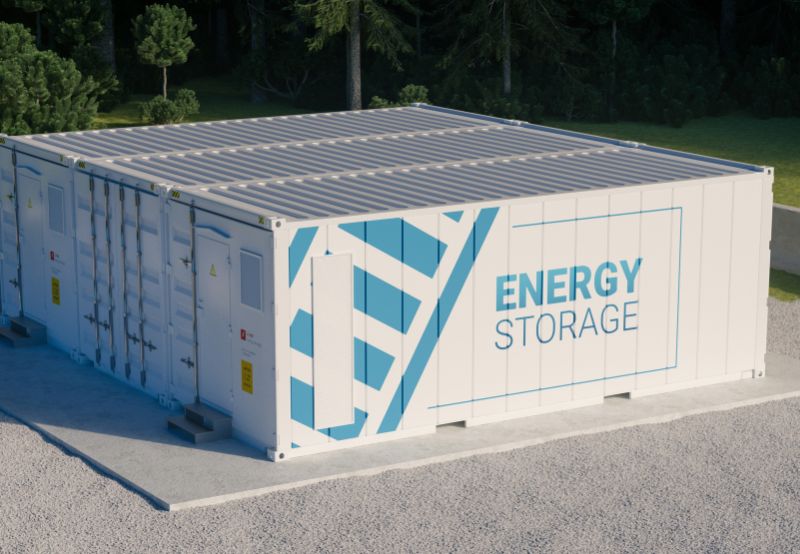
SJVN Tenders 250 MW/500 MWh Standalone BESS Projects in Haryana

The last date to submit bids is January 6, 2026

thumbnail

Follow Mercom India on WhatsApp for exclusive updates on clean energy news and insights


SJVN has invited bids to set up 250 MW/500 MWh standalone battery energy storage (BESS) systems at the 1,360 MW Panipat thermal power station in Haryana.

The last date to submit bids is January 6, 2026. Bids will be opened on the same day.

Bidders must submit an earnest money deposit of ₹240,000 (~$2,670.5)/MWh per project, and a performance bank guarantee of at least ₹600,000 (~$6,676)/MWh.

They must also submit a bid document fee of ₹29,500 (~$328) and a bid processing fee of ₹1.5 million (~$16,690.6) plus 18% GST.

The successful bidder must pay the success charges of ₹100,000 (~$1,112.7)/MWh plus GST and furnish a payment security fund of ₹500,000 (~$5,563.55)/MWh.

The scope of work covers setting up the projects, charging and discharging of BESS on a demand basis, construction of the transmission network and the bay up to the interconnection point, and identification and allocation of land for the projects.

It also encompasses operation and maintenance for 12 years.

The project also entails securing all approvals, permits, and clearances required to set up the BESS projects.

The projects must be designed for interconnection with the state transmission utility network. It must be located in the vicinity of the 220 kV substation of the Haryana Vidyut Prasaran Nigam.

The BESS will be charged by drawing power from Uttar Haryana Bijli Vitran Nigam (UHBVNL). It will inject power back into UHBVNL in accordance with dispatch instructions issued by the state load dispatch center. The BESS must use renewable energy to charge itself.

Projects already under construction or yet to be commissioned may be considered eligible if they are not availing subsidies under any state or central program and do not have a current obligation to sell the power to beneficiaries.

The projects will be supported with viability gap funding (VGF) under the Power System Development Fund program. The VGF available to the successful bidder will be limited to ₹1.8 million (~$20,028.8)/MWh.

UHBVNL or the Haryana Vidyut Prasaran Nigam will provide the land to the BESS developer on a lease/right-to-use basis.

The BESS must be designed to discharge power for at least two hours and two operational cycles per day.

The projects must have a minimum dispatchable capacity of 70% at the end of 12 years.

The successful bidder and SJVN will sign a battery energy storage purchase agreement (BESPA) from the scheduled commissioning date or the date of commencement of supply for 12 years.

The projects must be completed within 18 months of signing the BESPA.

The BESS must maintain a round-trip efficiency of at least 85%.

Only commercially established and operational technologies must be used for the projects to minimize technology risk and ensure timely commissioning.

Successful bidders must have a net worth of at least ₹2.4 million (~$26,705)/MWh in the last financial year or at least seven days before the bid submission deadline.

They must have a minimum annual turnover of at least ₹3.6 million (~$40,057.6)/MWh in the last three financial years.

Alternatively, they can demonstrate an internal resource generation capability, as measured by profit before depreciation, interest, and taxes, of at least ₹720,000 (~$8,011.51)/MWh in the last financial year.

Alternatively, successful bidders may submit an in-principle sanction letter from the leading institutions/banks committing a line of credit for a minimum amount of ₹2 million (~$22,254)/MWh.

In February 2025, SJVN issued a request for selection to develop a 375 MW/1,500 MWh standalone BESS in Uttar Pradesh under the build-own-operate model.

According to Mercom India Research’s India’s Energy Storage Landscape, India installed over 341 MWh of BESS in 2024, marking an over sixfold increase from the 51 MWh installed in 2023.

RELATED POSTS

Get the most relevant India solar and clean energy news.

RECENT POSTS