


SEG Solar Begins HJT Module Production at Second US Manufacturing Facility
The Tomball facility brings SEG Solar’s total US module manufacturing capacity to 6 GW
September 16, 2026

Follow Mercom India on WhatsApp for exclusive updates on clean energy news and insights
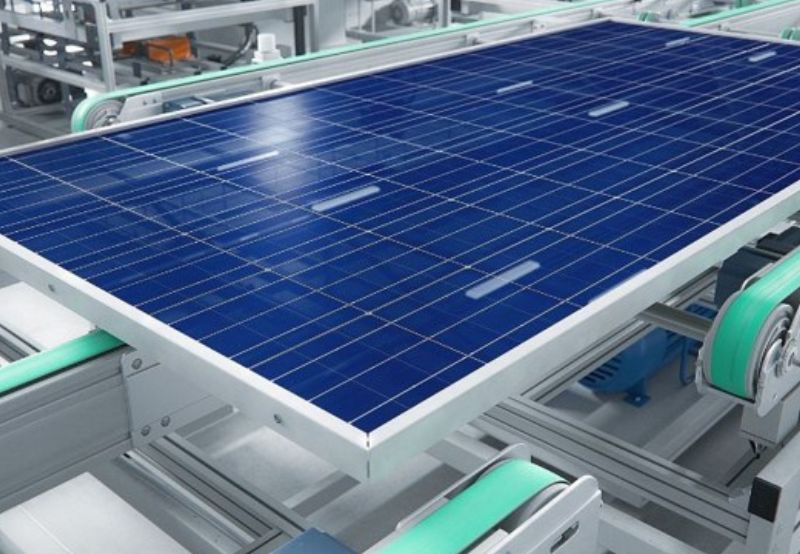
Houston-based vertically integrated solar manufacturer SEG Solar has started commercial-scale production of heterojunction (HJT) solar modules at its second U.S. manufacturing facility, Tomball #1, in the Greater Houston area, Texas.
The company said the first HJT module has rolled off the production line at the facility. With the start of production, SEG Solar’s aggregate U.S. solar module manufacturing capacity has reached 6 GW.
The Tomball #1 facility, inaugurated in August this year, has an annual module manufacturing capacity of 4 GW. The facility represented a $200 million investment and spans more than 500,000 square feet. It has four production lines designed to manufacture the company’s SIERRA N series HJT modules using 210 mm and 210R wafer formats.
According to SEG Solar, HJT technology offers higher bifaciality, a lower temperature coefficient, and lower degradation compared with conventional photovoltaic technologies. The company said these characteristics can increase lifetime energy production.
SEG Solar is also constructing another HJT module manufacturing facility in the U.S. with an annual capacity of 4.6 GW. Once completed, SEG expects its total U.S. module manufacturing capacity to exceed 10.6 GW.
In June of this year, SEG said it would develop the 4.6 GW facility in the Greater Houston area on a site covering about 1.15 million square feet. At the time, the company expected to complete construction by March 2027 and begin commercial production in May 2027.
The company is also developing a domestic solar manufacturing campus, with U.S.solar cell production targeted for 2028. The planned expansion is intended to establish an integrated manufacturing chain covering ingots, wafers, cells, and modules.
Last December, SEG Solar began building a 3 GW ingot and wafer manufacturing facility in Batang Regency, Indonesia. The facility will be expanded to enable the manufacture of 5 GW of ingots and wafers.


Rakesh Ranjan
More articles from Rakesh Ranjan.