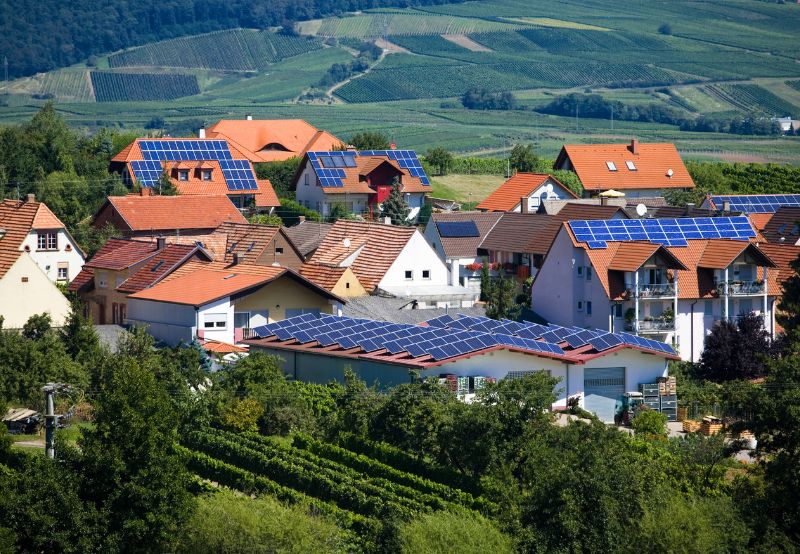
Rooftop Solar Installations Under PM Surya Ghar Reach 3 Million
The program targets 10 million rooftop solar installations by 2027
March 3, 2026
Follow Mercom India on WhatsApp for exclusive updates on clean energy news and insights
India’s residential rooftop solar installations under PM Surya Ghar: Muft Bijli Yojana have reached 3 million, according to a recent statement by Union Minister for New and Renewable Energy Pralhad Joshi.
This milestone marks early progress toward the program’s target of deploying rooftop solar systems across 10 million households nationwide by 2027.
Prime Minister Narendra Modi, responding to the minister’s announcement, described the achievement as a milestone in India’s clean energy transition. The government has positioned the initiative as part of its broader strategy to enhance energy security, expand renewable energy capacity, and reduce dependence on conventional power sources.
The PM Surya Ghar program was announced in January 2024 when the Prime Minister said the aim is to reduce the electricity expenditure of poor and middle-class households while enabling India’s self-reliance in the field of energy.
The program carries a total financial outlay of ₹750 billion (~$8.14 billion). The budget is intended to support installations, enable affordability for eligible consumers, and scale up domestic renewable energy infrastructure.
India’s rooftop solar capacity grew to 7.1 GW in the calendar year 2025, an over 123% year-over-year jump from 3.2 GW in 2024, according to Mercom India Research’s Q4 & Annual 2025 India Rooftop Solar Market Report.
Rooftop solar accounted for more than 19% of the total solar installations in the year. Residential consumers accounted for almost 76% of the total rooftop solar installations in 2025. The industrial, commercial, and government segments accounted for 18%, 5%, and 1% of the capacity added during the year, respectively.
According to Priya Sanjay, Managing Director at Mercom India, the PM Surya Ghar program will continue to drive installations in 2026. “There is growing anticipation around the sector’s trajectory once the program reaches the sunset date of 2027.”
She added that the demand from commercial and industrial entities will remain steady, as electricity cost savings from rooftop solar are time-tested.