Parliamentary Panel Flags Low EV Program Utilization and Skewed Spending by MHI
The Committee noted the enhanced outlays must be backed by realistic implementation pipelines
March 25, 2026
Follow Mercom India on WhatsApp for exclusive updates on clean energy news and insights
Parliament’s Standing Committee on Industry has raised concerns about the dominance of the automobile and electric vehicle (EV) ecosystem in the Ministry of Heavy Industries (MHI) budget, which is around ₹75.37 billion (~$802.49 million), accounting for about 94.9% of the total MHI demand.
This is driven by Faster Adoption and Manufacturing of (Hybrid) & Electric Vehicles (FAME), Prime Minister Electric Drive Revolution in Innovative Vehicle Enhancement (PM E-DRIVE), PM e-Bus, and Production-Linked Incentive (PLI) Auto, with PLI Auto alone accounting for about 74.8% of total demand.
The Committee warned that these enhanced outlays must be backed by realistic implementation pipelines and constant monitoring to avoid under-utilization and cuts at the revised estimates stage.
The Committee observed three major shifts program-wise: a sharp rise in PLI Auto to ₹59.39 billion (~$632.34 million), the phase-out of FAME India in budgetary terms, and a reduction of PM E-DRIVE from ₹40 billion (~$429.85 million) budgetary estimate for 2025-26 to ₹15 billion (~$159.71 million) for 2026-27.
PM E-DRIVE: Progress and Concerns
PM E-DRIVE was launched on October 1, 2024 and later extended until 31 March 2028, with a total outlay of ₹109 billion (~$1.16 billion). Its goals are to accelerate EV adoption, build domestic EV manufacturing capacity, support MSMEs and startups, create charging infrastructure, and enable the adoption of over 2.8 million EVs.
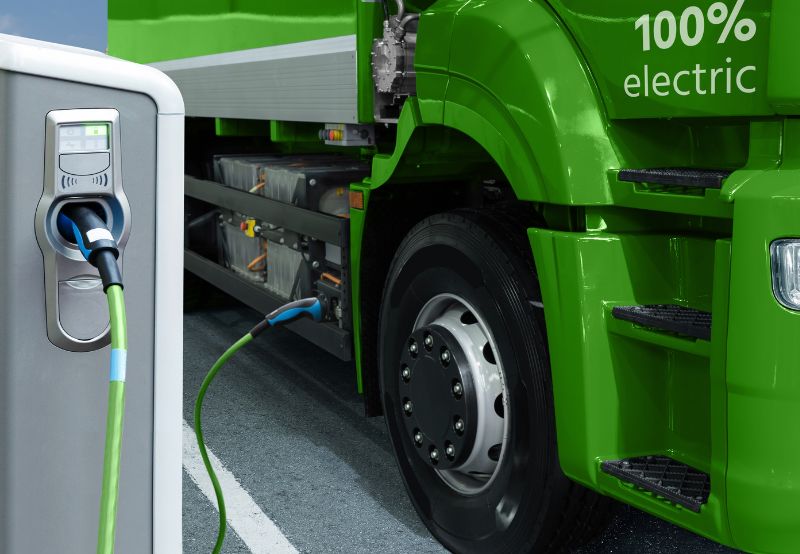
However, the Committee observed that utilization is heavily concentrated in e-2W and e-3W (L5) segments, while capital-intensive areas such as e-buses, charging stations, e-trucks, e-ambulances, and testing upgrades have seen limited or nil expenditure in the initial phase.
It noted that the demand-incentive component has fallen sharply to about ₹3.13 billion (~$33.33 million) in the budgetary estimates for 2026-27, down from ₹11.29 billion (~$120.21 million) in the revised estimates for 2025-26, before the ecosystem is fully established.
As of January 31, 2026, 1.65 million vehicles had been incentivized, against a revised target of 2.82 million, representing roughly 58.6% of the target. Progress is concentrated in e-2Ws and e-3Ws, while e-trucks and e-buses recorded nil achievement, and e-rickshaws performed poorly despite a large market.
The Committee recommended extending e-2W incentives until March 31, 2028, restoring the original e-rickshaw target, enforcing action against non-compliant vehicles, and revising the e-3W target with incentives resumed.
E-trucks, E-Ambulances, E-Buses, Charging, and Testing
For e-trucks and e-ambulances, the Committee said that implementation is still at a preparatory stage despite the availability of guidelines and certification steps, and that it demands clear, non-negotiable timelines and milestone-based monitoring.
For e-buses, it noted that the first tender for 10,900 e-buses has been concluded and a second tender for 2,900 e-buses has been floated, but insists that actual deployment, not just tendering, must happen quickly.
On EV public charging stations, the Committee said that policy groundwork has been done, but fund utilization remains limited.
The Standing Committee recommended revising the subsidy structure and preparing a time-bound rollout plan. It urged faster procurement and stronger monitoring, as testing bottlenecks could slow EV approvals and localisation.
Pending EV Claims
The Committee noted that claims for 232,588 EVs were still awaiting reimbursement as of January 31, 2026, mostly for e-2Ws. It attributed the delays mainly to a lack of integration between certain state portals and VAHAN, as well as masked customer data that complicated verification.
The Committee stated these issues should have been anticipated earlier and recommended a fully integrated, real-time digital verification system and a strict claim-processing timeline.
The Committee recommended implementing a consumer incentive program for e-4Ws, as they are currently not included in PM E-DRIVE, and high initial costs remain a barrier. They want a targeted, time-limited subsidy linked to battery capacity, efficiency, and price limits, along with regular evaluations to determine if PLI incentives are lowering retail prices.
FAME Transition, PM e-Bus PSM, and PLI Auto
The Committee noted that FAME India is effectively closed in budgetary terms, though ₹11.81 billion (~$125.75 million) was still needed in the revised estimates for 2025-26 to settle past liabilities.
It stressed that the shift from FAME to PM E-DRIVE must be predictable and all pending liabilities should be settled in a time-bound manner.
About the PM e-Bus Sewa Payment Security Mechanism (PSM), it said the program is critical for de-risking the gross cost contract model, but emphasized the need to track deployment, payment performance of transport authorities, and long-term fiscal exposure.
For the Scheme to Promote Manufacturing of Electric Passenger Cars in India (SPMEPCI), the Committee highlighted that no applications were received despite the program’s strategic importance, suggesting a possible misalignment between the program’s design and market expectations.
It recommended a review of thresholds, domestic value-addition timelines, and incentive design, while safeguarding localisation goals.
For PLI Auto, utilization has improved relative to the revised estimates in recent years, but the budgetary estimates have also been very high compared to the revised figures. It noted that PLI Auto now dominates the Ministry’s budget, thereby increasing fiscal and execution risks.
The Committee recommended conservative, pipeline-based budgeting, monthly monitoring of approved applicants, flexibility in eligibility rules for high-potential domestic EV players, and contingency plans for reallocation of unutilised funds.
PLI ACC and Battery Capacity
The Committee criticized the implementation of the PLI Advanced Chemistry Cells. Although the approved program path envisioned subsidies of ₹27 billion (~$287.47 million) in 2024-25, ₹38 billion (~$404.61 million) in 2025-26, and ₹45 billion (~$479.13 million) in 2026-27, actual allocations and utilization have been very low.
It called for a review based on beneficiaries, with conditional timeline extensions only for genuine constraints, capacity reallocation for underperformers, and alignment of budget allocations with the approved subsidy plan.
Out of the planned 50 GWh, only 40 GWh has been awarded so far, and just 1 GWh has been commissioned; the remaining 39 GWh is still under commissioning. The Committee recommended a phased approach to enforcement, including broader treatment of R&D and software, and stronger domestic testing infrastructure.
In January this year, MHI notified amendments to the PLI program for the automobile and auto components industry. The amendments have revised the performance criteria for EVs eligible for incentives and aligned them with new national electric mobility programs, such as the PM E-DRIVE program.