Ludhiana Municipality Invites Bids for EV Charging Stations, Battery Swap Points
The last date to submit bids is March 19, 2026
March 2, 2026
Follow Mercom India on WhatsApp for exclusive updates on clean energy news and insights
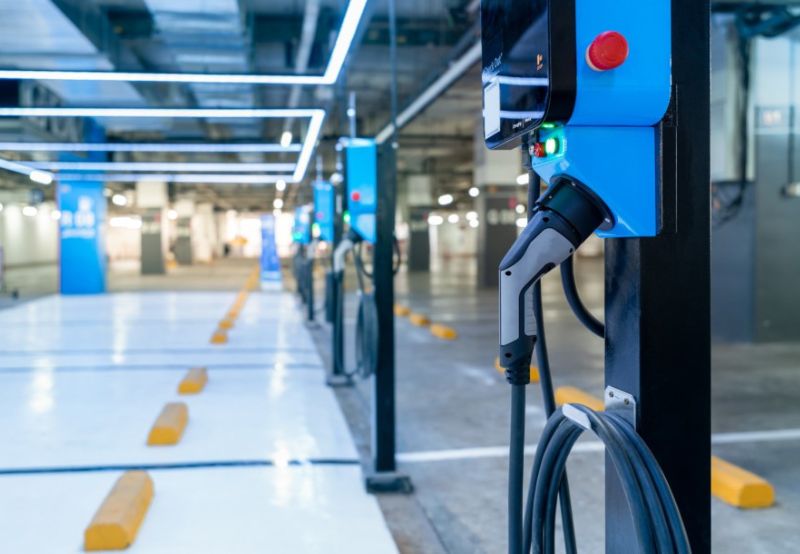
The Municipal Corporation of Ludhiana (MCL) has invited bids from central and state public-sector undertakings to supply, install, operate, and maintain electric-vehicle charging stations (EVCS) and battery-swap points under a public-private-partnership (PPP) model.
The last date to submit bids is March 19, 2026. Bids will be opened on March 20.
Bidders must submit an earnest money deposit of ₹1 million (~$10,998) and a tender document fee of ₹10,000 (~$110).
The scope of work includes conducting detailed feasibility assessments and site surveys, installing EVCS infrastructure with compatible AC and DC chargers, and deployment of charging management software and digital payment integration.
It also covers providing consumer assistance and helpline services, as well as operation and maintenance for 10 years.
MCL will facilitate permissions, land/space allocation at identified locations, and support coordination with power distribution companies. The project will be implemented under a 10-year PPP model.
Selected bidders must establish 50 units of electric vehicle charging stations, including hardware, electrical equipment, EV charging station accessories, software, and a payment gateway/app. They must also set up 10 battery swap points.
The revenue share between MCL and the successful bidders will be ₹1 (~$0.011) for every unit sold. The successful bidders must also share 50% of the advertisement revenue with MCL, and if they utilize parking space for more than three electric charging stations (ECS), they must pay ₹2,000 (~$22) per ECS.
The battery swap points must be modular battery storage points with 12–48 battery slots, and have an in-built battery management system.
Successful bidders must use batteries of lithium iron phosphate or nickel manganese cobalt chemistries with a capacity of at least 1.5 kWh to 2.5 kWh per battery swapping unit.
Each EVCS must integrate its rooftop with solar wherever possible.
Successful bidders must have completed two externally aided projects completed/ongoing in the last five years and must have completed/ongoing at least one project management unit (PMU) assignment overseas.
Additionally, they must have delivered, consulted on, or executed services related to the deployment of resource personnel or the establishment of PMUs for central or state government projects/programs for at least five years.
They must also have prepared detailed project reports, at least two techno-economic viability studies, impact assessments, and implemented skill development initiatives of the Government of India for the last five years.
Selected bidders must have received at least a single order for IT integration services of a minimum of ₹50 million (~$549,891) from a government department/Ministry.
They must have executed at least one turnkey construction project for CPSEs.
Successful bidders must have a registered vendor/partner with experience in advertising/OOH media or revenue generation.
Bidders must have a minimum annual turnover of ₹200 million (~$2.2 million) in the last three financial years. They must also have an average annual turnover/receipt of at least ₹40 million (~$439,913) from consulting services during the same period.
Additionally, bidders must have achieved a minimum turnover of ₹300 million (~$3.30 million) in the financial year 2024–25, including at least ₹50 million (~$549,891) from consulting services.
The projects are aligned with the Union Cabinet’s ‘PM Electric Drive Revolution in Innovative Vehicle Enhancement Program,’ and the ‘PM-eBus Sewa-Payment Security Mechanism Program, aimed at accelerating the penetration of EV share in the mobility sector.
The Ministry of Power released the guidelines for installing and operating electric vehicle chargers. According to the guidelines, any entity can establish a charging infrastructure, and setting up and operating EV charging stations is a de-licensed activity.