India’s Rooftop Solar Growth Hinges on Financing and Execution: Interview

C&I consumers now consider rooftop solar systems as a cost-management and energy-security tool

June 26, 2026

thumbnail

Follow Mercom India on WhatsApp for exclusive updates on clean energy news and insights


Rooftop solar systems pack a balanced mix of advantages that make them suitable for multiple customer segments, be it MSMEs, commercial and industrial consumers, or homeowners. However, despite strong demand, the adoption of rooftop solar systems continues to lag due to factors like high upfront costs, limited access to affordable financing, fragmented procurement, and concerns about installation quality and performance.

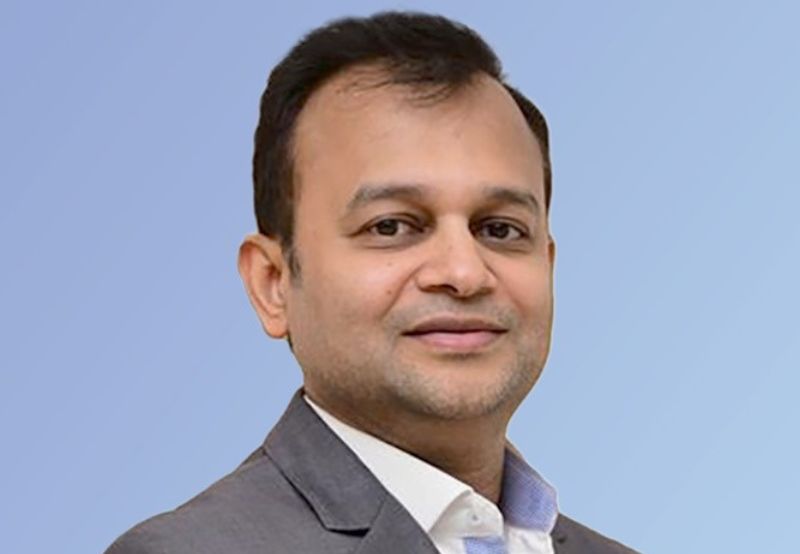
In an interview with Mercom India, Anand Jain, Founder of Aerem, a Mumbai-based climate fintech startup working to solve these challenges through a full-stack rooftop solar platform, discusses how innovative financing and integrated execution models could accelerate rooftop solar adoption.

India has set ambitious rooftop solar targets, yet deployment remains far below its potential. What do you see as the biggest barrier that’s preventing rooftop solar systems from scaling?

The key barriers are not technological but operational, financial, and trust-related. High upfront costs, fragmented vendor quality, slow or inconsistent approvals and net‑metering processes, and limited post‑sale customer support continue to slow down adoption, especially for homeowners and MSMEs who need straightforward, low‑risk solutions.

At the same time, government incentives, clearer policy signals, and manufacturing support are creating a strong enabling environment that reduce sstructural risks. Aerem was founded with the aim of removing the remaining barriers by combining accessible financing, standardized procurement, verified engineering, procurement and construction (EPC) partnerships with end‑to‑end project management and monitoring.

Do you think the next phase of India’s distributed energy growth will be constrained more by access to capital or by execution challenges such as approvals, installer quality, and customer acquisition?

It will be constrained by both, but execution challenges will likely become more visible as the market scales. Capital is still a major bottleneck, particularly for MSMEs and smaller commercial consumers who may have strong project economics but limited collateral or balance-sheet flexibility. At the same time, even when financing is available, poor installer quality, slow approvals, and weak customer education can slow down conversion and reduce confidence. The winners in this market will be the platforms that solve both the financing and execution challenges.

India’s rooftop solar market is often described as a financing challenge rather than a technology challenge. What is your assessment?

I agree with that assessment. The technology is proven, the economics is compelling, and solar modules are more accessible than ever; the real issue is whether the market can translate the economics into accessible financing and reliable delivery. For many MSMEs, the barrier is not whether solar makes sense, but whether they can fund the upfront capex without stress on working capital. That is why structured solar finance, collateral-light credit, and repayment structures aligned with savings are so important to adoption.

 Unlike other clean energy segments, institutional capital has flowed relatively little to rooftop solar. What are some of the factors preventing capital from flowing to the sector?

Institutional investors still see rooftop solar systems as operationally complex and relatively small-ticket as compared to utility-scale renewable projects. The sector is fragmented, documentation is inconsistent, asset quality varies widely, and monitoring standards are not yet uniform across the market. Lenders also want confidence in an installer’s capabilities, equipment quality, collection performance, and long-term asset monitoring before they commit capital at scale.

Rooftop solar deployment varies significantly across states. Which policy or market interventions have been most effective, and what can laggard states learn from them?

The strongest markets are usually the ones where policy clarity, distribution companies’ (DISCOMs) responsiveness, vendor ecosystems, and customer awareness work together. The most effective interventions have been streamlined net metering, faster approvals, and predictable subsidy and registration processes, especially for residential rooftop programs. Lagging states can learn that rooftop solar systems scale best when the customer journey is simple and time-bound, and when lenders, EPC developers, and DISCOMs are aligned rather than working in silos.

A state does not need to reinvent the market; it needs to reduce friction and improve the reliability of execution. A predictable regulatory environment builds confidence for both consumers and investors.

Many stakeholders believe distributed solar projects will play a critical role in India’s clean energy transition. What unique advantages do rooftop solar systems offer compared to utility-scale renewable energy, and where do you see its greatest long-term opportunity?

Rooftop solar systems have a unique advantage: they generate power where it is consumed, reduce reliance on the transmission grid, and give users direct control over their energy costs. They also have a strong energy-security value proposition and can be deployed quickly at scale across homes, MSMEs, institutions, warehouses, and commercial buildings. The greatest long-term opportunity for rooftop solar segment lies in the C&I and MSME segments, where power costs are material and solar can directly improve competitiveness, and in residential adoption under PM Surya Ghar, which can create a very large, distributed base over time.

As the rooftop solar segment scales, how important will standardization across financing, contracts, installation quality, and performance monitoring be in attracting larger pools of capital?

Standardization will be absolutely critical. Large pools of capital need predictability, comparable underwriting, consistent documentation, and measurable asset performance across portfolios. When financing structures, EPC quality, warranties, and monitoring standards are standardized, lenders can price risk better and deploy capital faster. That is exactly why integrated platforms matter: they reduce transaction friction and make a fragmented market more investable.

The PM Surya Ghar program has generated significant momentum in the residential segment. What changes can this initiative bring to the broader rooftop solar ecosystem over the next few years?

The PM Surya Ghar program is likely to do much more than add residential capacity; it will expand awareness, normalize rooftop solar systems as a household purchase, and deepen the ecosystem of installers, financiers, and service providers. The program’s design, including subsidies, a national portal, and state-level implementation through DISCOMs, should help simplify the adoption journey for consumers. Over time, this will create a larger, more mature ecosystem that also benefits the commercial market by improving public familiarity, vendor capacity, and confidence in financing. It should also push the market toward better quality, better monitoring, and more consumer-centric service

With rising electricity costs and a growing focus on energy security, are C&I consumers approaching rooftop solar systems differently today than a few years ago?

Yes, very differently. A few years ago, rooftop solar systems were often viewed mainly as a sustainability initiative; today, C&I consumers consider them as a strategic cost-management and energy-security tool. They are asking sharper questions about payback, execution timelines, asset performance, and financing structure rather than only about module prices. This is especially true for MSMEs, where energy savings can directly improve margins and competitiveness, but working capital constraints still make the financing model decisive

If you could recommend three policies or regulatory changes that would have the greatest impact on accelerating distributed solar adoption in India, what would they be and why?

First, I would recommend faster and more predictable approvals, including simpler net-metering processes and strict service timelines, because delays kill conversion and increase project costs. Second, I would support deeper, more targeted financing for MSMEs and residential customers, including blended finance, credit enhancement, and better alignment between loan repayments and solar savings. Third, I would push for stronger standardization in quality, contracts, and monitoring so that rooftop solar systems become a more investable asset class for lenders and institutional investors. Together, these changes would make the market simpler for consumers and more bankable for financiers.

RELATED POSTS

Get the most relevant India solar and clean energy news.

RECENT POSTS