Hybrid Systems, Storage Drive Next Phase of India’s Solar Growth

Mercom India’s RE Buyer-Seller Meet was held in Mumbai on April 17

thumbnail

Follow Mercom India on WhatsApp for exclusive updates on clean energy news and insights


India’s solar industry is entering a new phase of growth, marked by a rapid shift toward hybrid energy systems, battery storage, and high-efficiency module technologies, driven by rising renewable penetration, grid stability challenges, and evolving policy frameworks.

Industry experts highlight the growing importance of round-the-clock (RTC) power solutions, domestic content requirement (DCR)-driven solar manufacturing, and advanced technologies such as TOPCon, as the market moves beyond cost optimization toward reliability, efficiency, and long-term energy security.

Storage Adoption

Energy storage is emerging as a critical enabler, particularly in the commercial and industrial (C&I) segment, driven by clear return-on-investment (ROI) opportunities.

Gautam Patil, Vice President at Cygni Energy, pointed to gaps in domestic manufacturing capabilities. “We do not have lithium iron phosphate (LFP) cells manufactured at scale in India today,” he said, highlighting continued reliance on imports and the evolving ecosystem for high-voltage battery systems.

“Since batteries do not generate power, they only store energy, the ROI depends on the difference between the cost of charging and the value of the energy you displace,” Patil explained.

According to Patil, a key financial driver is the displacement of high grid tariffs.

A sample calculation shows a saving of ₹10 (~$0.106) per unit by using stored solar energy at a cost of ₹2.5 (~$0.027) per unit, avoiding a ₹12.5 (~$0.133) per-unit time-of-day (ToD) tariff. “Based on this saving, a battery system costing ₹50,000 (~$531)/kWh can achieve a payback period of approximately four years,” he added.

Shift Toward RTC and Hybrid Solutions

With India’s utility-scale solar pipeline exceeding 200 GW and high renewable penetration in states such as Rajasthan, Gujarat, and Maharashtra, grid stress and curtailment are becoming increasingly prominent. In this context, hybrid power and RTC solutions have gained prominence.

Rahul Makahaniya, Chief Marketing Officer at Soleos Energy, emphasized the rapid rise of hybrid and RTC solutions in response to grid challenges. “RTC and hybrid are picking up very fast. That is the only way ahead because states already have 45% to 60% renewable energy in the power mix.”

He added that evolving customer expectations are driving this transition. “The market has matured beyond just saving money. Customers now want energy security and predictability.”

Manufacturing Expansion and DCR-Driven Demand

Harsh Gandhi, Key Account Manager at Adani Solar, discussed his company’s manufacturing scale-up and the impact of DCR policies. “Adani has been in solar manufacturing since 2016. We started with polycrystalline, then shifted to PERC, and now we are manufacturing TOPCon.”

The company currently operates 4 GW of module manufacturing capacity and is expanding to 10 GW, with a strong focus on TOPCon technology.

“Our capacity utilization is almost 100%. Modules compliant with domestic content requirements (DCR) are in demand, especially in the residential market,” he noted.

On policy impact, he noted that DCR mandates are now expanding beyond residential applications. “For the last two years, it has been compulsory for rooftop, and now it is impacting C&I customers as well.”

Technology Shift Toward TOPCon

In module technology, the consensus is that TOPCon is the current standard, set to replace PERC. While HJT technology exists, its manufacturing equipment is significantly more expensive than TOPCon without offering a substantial performance premium, making it commercially unviable, according to Gandhi.

He observed that TOPCon and other n-type technologies are becoming the industry standard due to their superior efficiency and lower levelized cost of energy (LCOE).

“If you install TOPCon instead of PERC, you get more power generation and need less land,” he added.

He cautioned that legacy technologies may soon lose relevance. “PERC lines may become obsolete in one to two years.”

Policy Uncertainty and Supply Chain Risks

Makahaniya spoke about uncertainties around policy implementation, particularly the upcoming deadline for the Approved List of Models and Manufacturers (ALMM) List II mandate.

He suggested not waiting for policy clarity before placing orders for modules compliant with the ALMM List II mandate and sourcing from multiple vendors to hedge against supply challenges.

He pointed to broader supply chain risks influenced by geopolitical developments. “Supply chain risks extend beyond modules. You need collaborative contracts and contingency planning,” he said, adding that payment delays account for most project delays. Geopolitical events such as the conflict in Iran are affecting the supply of materials for mounting structures. To manage these risks, Makahaniya emphasized building collaborative contracts focused on joint risk mitigation rather than risk transfer.

“This includes meticulous contingency planning, open discussions with vendors to anticipate and plan for disruptions, and establishing delivery-linked payment milestones to minimize financial exposure,” he said.

Storage Economics and Diesel Replacement

The discussion also highlighted the economics of replacing diesel gensets with solar-plus-storage solutions.

Makahaniya noted that considering diesel power costs approximately ₹22 (~$0.233)/kWh to ₹25 (~$0.265)/kWh, storage-backed systems can deliver around 20% cost savings, making them increasingly attractive for industrial consumers.

Hybrid Inverters Finding Traction

Rakshanda Lande, Head of Sales and Marketing (West and Central India) at Ningbo Deye New Energy, noted the ability of hybrid inverter systems to integrate multiple energy sources.

“Now the highest in demand are the hybrid inverters. They can be integrated with multiple sources: solar, grid, and battery storage; they can even be connected with diesel gensets,” she said, adding that hybrid systems are gradually replacing conventional grid-tied solutions.

She also stressed the importance of procurement planning and service readiness.

“Inverters shouldn’t be the last thing EPC contractors purchase. They should give equal importance to inverters,” Lande said, pointing to ongoing supply chain constraints.

Solutions for Indian Conditions

Pranay Shinde, Chief Executive Officer at SRPL Group, underscored the need for India-specific engineering approaches, particularly for mounting structures.

“We follow Indian Standards like IS 875 and design structures based on topography and regional conditions,” he said, emphasizing safety and performance optimization.

Shinde also emphasized the need for India-specific engineering solutions, including robust mounting structures designed for local conditions such as high heat, dust, and varying wind zones.

“Standardization in structures and components is seen as critical for reducing costs, improving safety, and accelerating deployment. Additionally, after-sales service, warranty clarity, and proper system design are highlighted as decisive factors for buyers, alongside the importance of early procurement to avoid supply chain delays.”

He noted a few practical challenges in rooftop installations, including handling difficult surfaces such as asbestos roofs, for which careful design and non-invasive techniques are essential.

Makahaniya noted that the convergence of policy mandates, tariff pressures, and technological advancements will accelerate the industry’s transformation.

These discussions were part of Mercom India’s RE Buyer-Seller Meet in Mumbai. The next Buyer-Seller Meet will be in Jodhpur, on May 15, 2026.

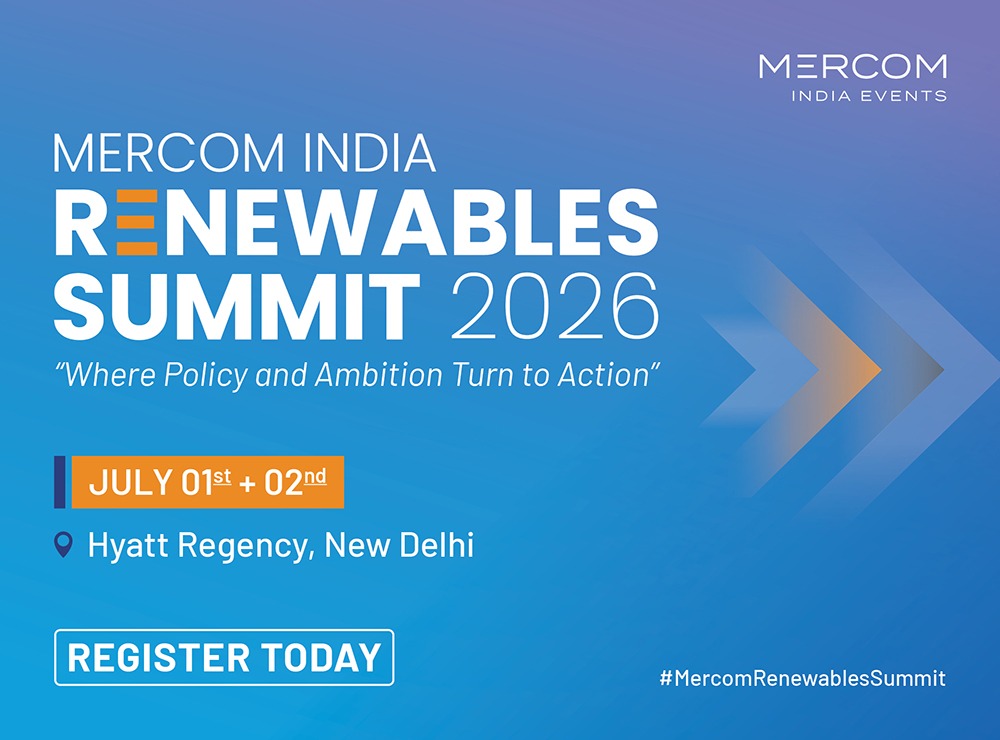
Mercom is also hosting the sixth edition of its Renewables Summit, the largest conference in the sector, on July 01 and 02 this year at the Hyatt Regency, New Delhi.  It brings together all the stakeholders who are shaping India’s renewable energy industry.

RELATED POSTS

Get the most relevant India solar and clean energy news.

RECENT POSTS