Himachal Proposes EV Charging Points, Energy Efficiency Norms for Buildings

The amendment to the town planning rules introduces ECBC compliance for buildings

thumbnail

Follow Mercom India on WhatsApp for exclusive updates on clean energy news and insights


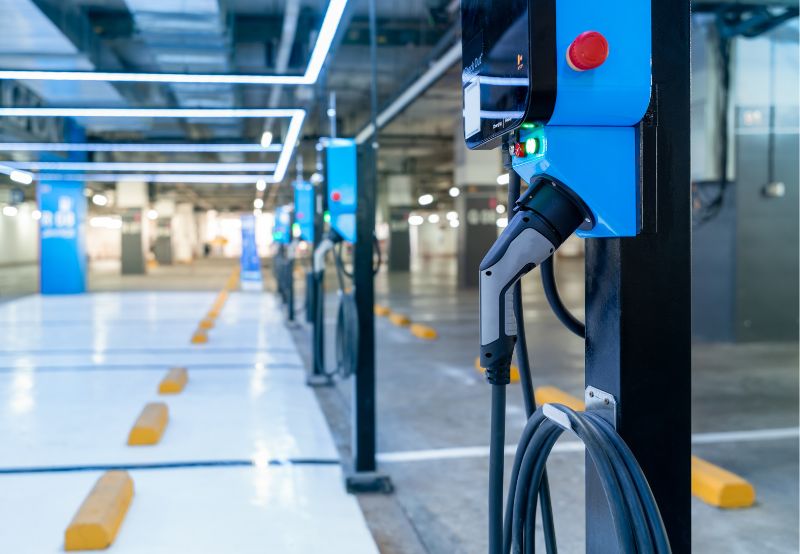
The Himachal Pradesh government has proposed amending the Town and Country Planning Rules, 2014, to facilitate the provision of electric vehicle (EV) charging points in commercial, public, semi-public buildings, and real estate projects.

The draft amendment seeks to insert a new regulation for EV charging points in accordance with the EV charging infrastructure provisions of the amended Model Building Bye-Laws, 2016.

The draft would also insert a new appendix, under which the Himachal Pradesh Energy Conservation Building Code (HPECBC) and Rules, 2018 would apply in all planning areas and special areas of the state to specified categories of buildings with a total built-up area of 750 sq m or more. The covered categories are hospitality, health care, assembly, business, educational, shopping complex and mixed-use buildings.

For mixed-use buildings, each commercial part must be classified separately. If a differing use occupies less than 10% of above-grade floor area, compliance is based on the sub-classification with the higher percentage of above-grade floor area. If one or more sub-classifications are more than 10%, each such part must comply with the requirements applicable to that classification.

Under the proposed compliance process, the applicant/owner/developer must engage a Bureau of Energy Efficiency empanelled energy auditor for ECBC compliance verification.

The draft also states that the Director of Energy may separately register/empanel energy auditors for this purpose in view of Himachal Pradesh’s distinct geographic and climatic conditions. Project drawings must be reviewed for compliance, and non-compliant designs must be rectified. Building-construction permission must be issued by the competent authority after verification of the prescribed compliance forms.

The draft also prescribes form-based requirements for commencement, construction-stage review, completion, occupancy and post-occupancy reporting.

The occupancy certificate would be issued subject to the condition that the owner, through the empanelled energy auditor, submits an energy performance index report to the designated agency for two consecutive years after the building has been fully operational.

The draft also provides for an incentive of 0.25 additional floor area ratio (FAR) without additional fee where the owner seeks green building ratings from IGBC, GRIHA, or ASSOCHAM GEM, provided the project obtains the specified qualifying ratings. Approval of the building plan and grant of the additional FAR may be allowed on the basis of pre-certification, while the final completion certificate would require the final rating certificate from the authorised rating agency.

If the applicant fails to obtain the required rating certification, the additional FAR would be compounded at 10 times the normal building planning permission fee.

Mercom had previously reported how the Bureau of Energy Efficiency’s Energy Conservation and Sustainable Building Code (ECSBC) 2024 would improve energy efficiency in commercial buildings and office spaces, and drive renewable energy adoption, provided states incorporate it into local building bylaws.

Subscribe to Mercom’s real-time Regulatory Updates to ensure you don’t miss any critical updates from the renewable industry.

RELATED POSTS

Get the most relevant India solar and clean energy news.

RECENT POSTS