High Temperatures Emerge as Key Risk for Battery Storage in India
High temperatures, auxiliary load, and environmental stress are reshaping how storage projects are designed and financed
March 18, 2026
Follow Mercom India on WhatsApp for exclusive updates on clean energy news and insights
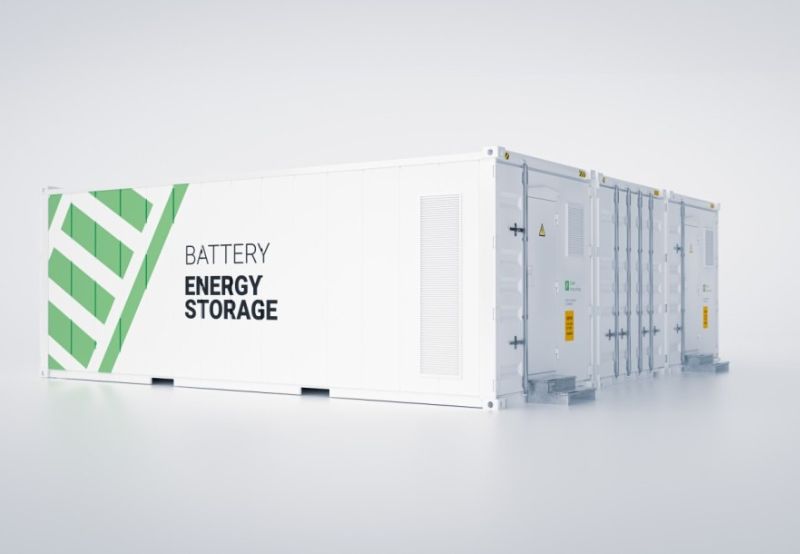
India’s battery energy storage market is entering a new phase of growth, but developers are increasingly facing a constraint that traditional project models have not fully captured: heat.
In key renewable hubs such as Rajasthan and Gujarat, summer temperatures often exceed 40°C, reaching 48°C during peak periods. In some procurement frameworks, systems are now expected to perform at ambient conditions approaching 50°C.
These conditions are significantly higher than the operating assumptions built into many containerized battery systems, which are typically optimized for temperatures around 15–30°C.
This mismatch is beginning to influence both engineering decisions and financial expectations.
Altering Degradation Patterns
Lithium-ion batteries are highly sensitive to temperature. As operating temperatures rise, internal chemical reactions accelerate, leading to faster capacity fade and increased internal resistance.
According to industry experts, batteries operating in sustained temperatures above 40°C tend to lose usable capacity earlier than expected under standard assumptions. The effect is not linear, as elevated temperatures can amplify cycling stress, pushing systems toward faster performance decline than projected by models calibrated to temperate conditions.
Sunil Parikh, Chief Technical Officer at Mecpower Solutions, said that prolonged exposure to high temperatures accelerates degradation and increases the load on cooling systems, which in turn reduces overall system efficiency.
Engineers emphasize that the issue is not whether lithium-ion batteries can function in such environments, but whether systems can sustain performance without hidden losses. In high ambient conditions, systems often experience a combination of declining efficiency, increased auxiliary consumption, and accelerated degradation, all of which affect long-term output.
Energy Guzzling Cooling Systems
Thermal management systems are designed to maintain safe operating temperatures, but in India’s climate, they often operate continuously during the summer months.
This has direct implications for efficiency and revenue.
Auxiliary systems, particularly HVAC, can consume a meaningful share of the energy stored in the battery. While developers often assume auxiliary consumption of 1–2% based on temperate-climate benchmarks, industry experience in India suggests this can rise to 3–6% under sustained high-temperature conditions, materially affecting net round-trip efficiency and dispatchable energy.
Debmalya Sen, President at the India Energy Storage Alliance, said the issue is often misunderstood as a battery limitation. “This is not a problem of BESS. It is a problem of underestimating auxiliary consumption,” he said, noting that unrealistic cooling assumptions are common in project models.
Robin Bisht, Head of Engineering (BESS) at SunStripe, agrees. He said cooling energy in Indian conditions can no longer be treated as a marginal factor, as it directly affects project economics.
Design Localization
Many BESS deployments in India still rely on standard configurations adapted from Europe or North America. While these systems can operate at higher temperatures, their performance may not be optimized for sustained exposure to extreme heat.
This has led to a growing focus on localized engineering.
Developers are increasingly prioritizing larger HVAC systems designed for 50°C-class ambient conditions, improved airflow management to eliminate hotspots, and enhanced insulation to reduce heat ingress. Reflective coatings and optimized container layouts are also being used to limit solar heat gain. In some cases, liquid cooling is being introduced at the cell or module level to improve thermal control beyond container-level air conditioning.
Battery chemistry is another important consideration. Lithium iron phosphate batteries are widely used in India due to their higher thermal stability compared to other chemistries. However, experts caution that chemistry alone cannot offset poor system-level thermal design.
According to Bisht, one of the most critical indicators of readiness for Indian conditions is whether manufacturers can provide derating curves that show how power and energy output vary with ambient temperature. Without this data, it is difficult to assess system performance during peak summer conditions.
Safety Implications
Prolonged exposure to high ambient temperatures does not by itself trigger thermal runaway, but it reduces thermal margins and can accelerate degradation mechanisms that generate internal heat. This can make abnormal events more difficult to control, particularly if systems are already operating near thermal limits.
To mitigate these risks, modern BESS designs incorporate continuous temperature monitoring, conservative control logic, fault detection and isolation mechanisms, and robust ventilation and off-gas management systems. Propagation-resistant rack and container designs, along with fire detection and suppression systems tested as part of the integrated configuration, are increasingly critical.
For Indian deployments, these systems must be designed against peak summer operating conditions rather than annual averages.
Environmental Stress
Temperature is only one aspect of the operating environment. Dust, humidity, and coastal conditions introduce additional stress factors that can significantly affect system reliability.
Dust accumulation can rapidly degrade HVAC filter performance, particularly in arid regions such as Rajasthan and Gujarat, increasing maintenance frequency and operating costs. High humidity, especially when combined with temperature cycling, can lead to condensation inside enclosures, raising the risk of insulation failure and ground faults.
In coastal regions, salt-laden air can accelerate corrosion of bus bars, terminals, inverter components, and structural elements. As a result, design measures such as high enclosure ratings, positive-pressure filtered air systems, and corrosion-resistant materials are increasingly treated as baseline requirements. Salt-mist certification, such as IEC 60068-2-52, is also emerging as a procurement consideration for coastal installations.
Parikh noted that these environmental factors can significantly affect system reliability if not addressed during the design phase, while Bisht emphasized that they should be treated as core design inputs rather than operational afterthoughts.
Thermal Performance a Key Risk Factor
As storage projects scale, thermal performance is increasingly being evaluated as part of financial due diligence.
Higher auxiliary consumption reduces net energy output, while accelerated degradation can shorten asset life or bring forward the need for augmentation. Both factors can materially affect project returns if not accurately modeled.
Developers and investors are therefore placing greater emphasis on how systems perform under extreme conditions. This includes understanding how output changes at 45–50°C relative to standard conditions, how much energy cooling systems consume during peak summer operation, and how warranty terms are linked to ambient temperature limits. In many cases, exceeding specified temperature thresholds, even briefly, can restrict or invalidate warranty claims.
There is also growing recognition that degradation models must be adjusted to reflect Indian operating conditions rather than relying on standard curves calibrated to 25°C environments. Without such adjustments, financial projections may overestimate system life and revenue.
Bisht noted that these factors are becoming central to investment decisions, as thermal performance directly influences revenue realization over the project lifecycle.
Climate-Specific Design
India’s storage market is moving toward greater localization in both engineering and financial modeling.
Extreme temperatures, combined with environmental stressors, are forcing developers to rethink assumptions once taken for granted. Systems designed for milder climates may still function in India, but their long-term performance depends on how well they are adapted to local conditions.
Recent tenders indicate that procurement frameworks are already evolving. Agencies such as the Solar Energy Corporation of India and state utilities have begun requiring systems to deliver rated performance under site-specific extreme conditions, with design approaches aligned to Indian temperature profiles. In some cases, this includes explicit expectations for operation at ambient temperatures approaching 50°C.
As more projects come online, thermal management is expected to play a central role in determining which systems deliver on their promised performance.
In India’s climate, heat is no longer just an operating condition. It is becoming one of the defining factors in the viability of storage projects.
It is also important for developers to ensure they can earn every single rupee from their projects, as only 50% of the standalone battery energy storage systems evaluated in Mercom’s LCOS and Bidding Trends in Indian Energy Storage Projects Report showed positive project economics and viability under modeled assumptions, highlighting the ongoing cost challenges facing the industry.