GoodEnough Commissions 7 GWh of BESS Manufacturing Capacity in Uttar Pradesh

The company invested ₹4.5 billion in the manufacturing facility

thumbnail

Follow Mercom India on WhatsApp for exclusive updates on clean energy news and insights


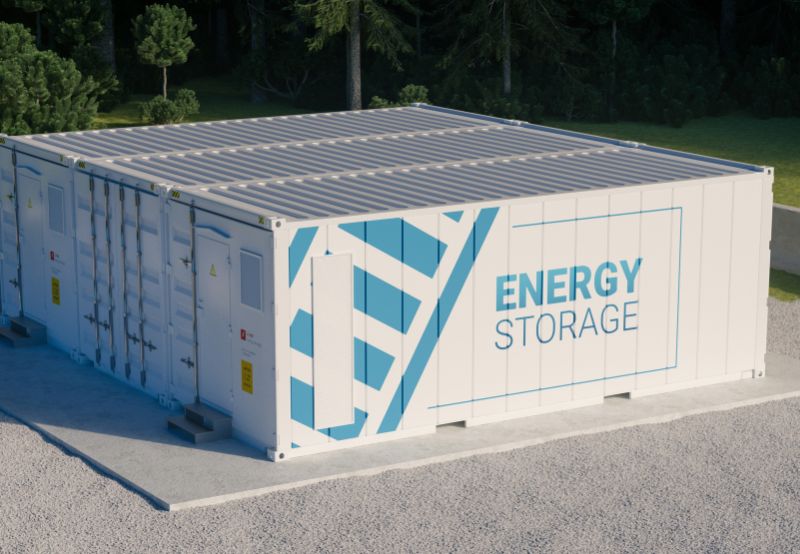
Energy storage solutions company GoodEnough Energy has commissioned an initial 7 GWh capacity of its battery energy storage system (BESS) manufacturing gigafactory in Noida, Uttar Pradesh.

The company has invested more than ₹4.5 billion (~$49.07 million) in the facility and plans to expand its manufacturing capacity to 25 GWh within three years.

GoodEnough said the 7 GWh operational capacity will serve multiple sectors, including manufacturing, infrastructure, healthcare, mining, and commercial real estate. The company has begun rolling out its BESS installations across the country.

The company aims to enter the electric vehicle charging infrastructure market, particularly in regions with weak connectivity. Its solutions will include smart features such as peak shaving, time shifting, and renewable energy integration.

Several Indian companies have begun entering the BESS manufacturing market in recent months.

Earlier this month, Kolkata-based Ddev Plastiks, a manufacturer of specialty compounds, announced a foray into BESS manufacturing with initial plans to set up a 5 GWh plant.

Bengaluru-based lithium-ion battery solutions provider Nash Energy commissioned a 2 GWh fully automated prismatic battery pack manufacturing line at its facility in Dobbspet, Karnataka.

The Ministry of Power has temporarily waived the Department for Promotion of Industry and Internal Trade registration requirement for bidders using lithium-ion cell technology with transfer-of-technology arrangements involving land-border-sharing countries, allowing them to participate in tenders for grid-connected BESS projects. The waiver will be for a one-year term, effective January 9, 2026.

BESS manufacturing in India is at a nascent stage, but the government is pushing for increasing domestic capacity.  The Ministry of Power has directed states and procuring entities to ensure a minimum of 20% local content in the procurement of BESS projects being implemented under the viability gap funding program.

The government has also advised all renewable energy implementing agencies and state utilities to incorporate a minimum two-hour co-located energy storage system equivalent to 10% of the installed solar capacity into all solar tenders.

India’s cumulative installed energy storage capacity reached 490 MWh by the end of June 2025, according to India’s Energy Storage Landscape 1H 2025 Report by Mercom India Research.

RELATED POSTS

Get the most relevant India solar and clean energy news.

RECENT POSTS