Exide Infuses ₹4.5 Billion into Subsidiary for Battery Manufacturing Expansion
The investment will fund EESL’s upcoming Li-ion battery manufacturing facility in Bengaluru
March 26, 2026
Follow Mercom India on WhatsApp for exclusive updates on clean energy news and insights
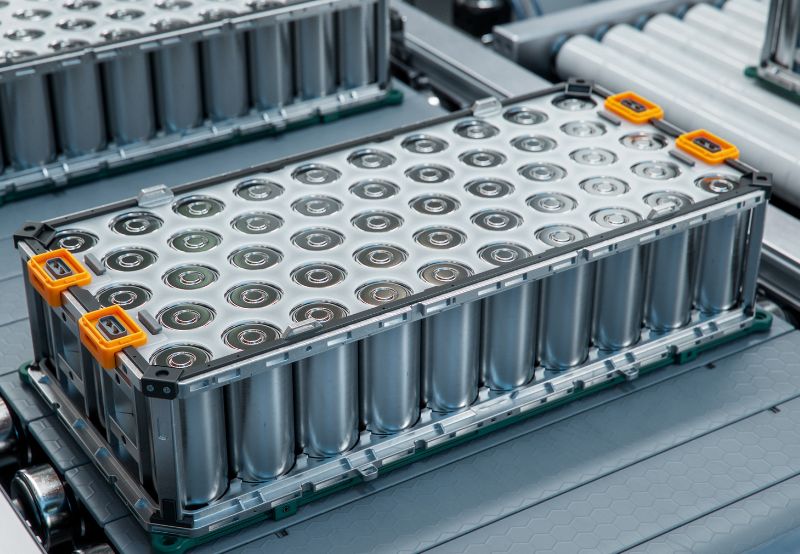
Exide Industries has made an additional investment of ₹4.5 billion (~$47.86 million) in its wholly owned subsidiary, Exide Energy Solutions (EESL), through a rights issue of equity shares. EESL is developing a facility in Bengaluru to develop lithium-ion battery cells and related products.
With this infusion, Exide’s total investment in EESL has increased to ₹48.02 billion (~$510.78 million), while its shareholding remains unchanged at 100%.
The subscription involved 112.5 million equity shares of ₹10 (~$0.11) each, issued at a premium of ₹30 (~$0.32) per share, aggregating to ₹4.5 billion (~$47.86 million), with the entire amount paid in cash.
Exide said the capital infusion will support the subsidiary’s ongoing project development and meet its broader funding requirements.
Last December, Exide invested ₹1.8 billion (~$20.04 million) in EESL by subscribing to the subsidiary’s equity capital via a rights issue
EESL, incorporated in March 2022, operates in the advanced battery manufacturing space, focusing on lithium-ion battery cells, modules, and packs for electric vehicles and other energy storage applications.
EESL has a paid-up capital of ₹15.04 billion (~$159.97 million), a net worth of ₹27.38 billion (~$291.24 million), and reported a turnover of ₹1.16 billion (~$12.34 million) in FY 2024-25.
India added nearly 547 MWh of battery energy storage capacity in 2025, around a 26% year-over-year increase from over 433 MWh, according to the newly released 2H & Annual 2025 India’s Energy Storage Landscape Report by Mercom India Research. India’s cumulative installed battery energy storage capacity reached almost 1.08 GWh as of December 2025. Solar-plus energy storage systems accounted for more than 54% of the cumulative installed capacity, followed by about 23% from solar-plus-wind round-the-clock projects and nearly 21% from standalone battery energy storage systems.
The global lithium-ion battery industry is at an inflection point characterized by rapid demand growth, falling prices, technological advancements, and intensifying global competition, according to a report published by McKinsey & Company. The demand for lithium-ion batteries crossed 1 TWh in 2024 and reached nearly 1.6 TWh in 2025.