


Energy Management Software Can Improve Battery Storage Economics: Interview
Kosol Energie expects rapid growth in battery storage adoption in India
November 5, 2026

Follow Mercom India on WhatsApp for exclusive updates on clean energy news and insights
India’s growing renewable energy capacity is creating opportunities for battery energy storage systems (BESS), particularly as developers and consumers seek to manage intermittent generation, reduce electricity costs, and meet peak-hour demand.
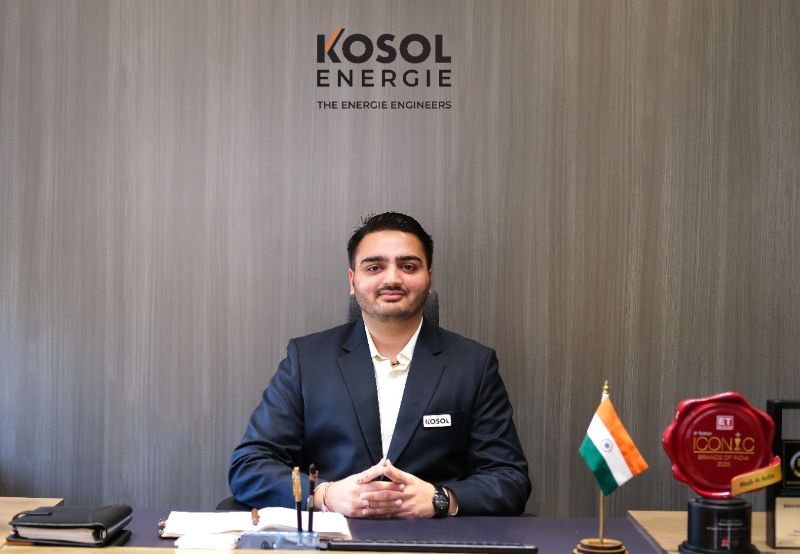
However, the economic viability of storage depends on how effectively it integrates with renewable energy systems and how intelligently it is managed through software, according to Kayan Kalthia, Executive Director, Business Development, Kosol Energie.
In an interview with Mercom India on the sidelines of the recently concluded Renewable Energy India (REI) Expo 2026, Kalthia said BESS should no longer be viewed merely as a backup power solution. Instead, it should be treated as an energy-management asset that can optimize electricity consumption, enable energy arbitrage, and improve returns on renewable energy investments.
What are Kosol Energie’s plans for the Indian battery energy storage market?
We have introduced KoBESS, our new vertical dedicated to battery energy storage solutions. While BESS may be relatively new to our Indian operations, we have been working in this segment in the U.S. market since 2015.
We entered the Indian BESS market around November 2025. We have worked extensively to develop solutions for residential, commercial and industrial (C&I), and utility-scale applications.
We recognized early that battery storage would become increasingly important for India as the country expands its renewable energy capacity.
Renewable energy is becoming central to the country’s energy mix. As renewable penetration increases, storage will be essential to manage generation variability, reduce curtailment, and shift electricity to periods of higher demand.
How do you assess the commercial viability of BESS for C&I consumers?
Consumers should not view BESS merely as a backup power solution. Storage becomes economically attractive when it is integrated into the overall electricity consumption and renewable energy management strategy.
For example, a battery can be charged using electricity generated by an on-site solar system or power purchased from the grid when market prices are low. The stored electricity can then be used during periods when electricity prices are higher.
This creates opportunities for energy arbitrage and lets consumers optimize electricity procurement costs. Our calculations indicate that properly optimized storage systems can achieve investment payback periods of approximately three to three-and-a-half years.
This makes storage attractive not only for C&I consumers but potentially for residential customers as well.
How can energy management software improve the economics of battery storage?
The decision-making process for electricity consumption and storage should be data-driven, not reliant on manual intervention. Our energy management system acts as the brain of the battery storage installation and the consumer’s overall electricity management system.
It evaluates whether to purchase electricity from the market, consume it directly from solar generation, or store it in the battery for later use.
For example, if the system anticipates lower solar generation over the next few days because of unfavorable weather conditions, it can prioritize charging the battery when electricity is available at lower prices.
Similarly, it can decide whether buying electricity from the market is more economical than using stored energy. If a consumer installs a conventional solar-plus-storage system without intelligent energy management, the investment payback period could extend to six or seven years.
However, integrating software that continuously optimizes electricity procurement and storage operations can significantly improve the economics.
We also structure our software pricing around customer savings, receiving a small percentage of the savings the system generates.
What is your outlook for battery storage adoption in India over the next two to three years?
I expect the Indian battery storage market to grow rapidly, similar to the solar industry’s initial expansion. However, the storage industry will also see greater accountability among manufacturers and solution providers.
Unlike some other renewable energy equipment, where performance issues may take longer to become apparent, battery performance and reliability problems can emerge within one or two years.
As a result, manufacturers offering poor-quality products or inadequate technical support will struggle to sustain their market position. Companies that focus on product quality, reliability, and long-term customer performance will be better positioned to benefit from the industry’s growth.
Do you see transmission infrastructure becoming a major challenge for India’s renewable energy expansion?
Transmission infrastructure will remain a significant challenge as renewable energy installations continue to increase.
The electricity system requires additional substations, greater connectivity, and upgrades to existing infrastructure to accommodate growing generation capacity. Building new substations and upgrading existing grid equipment require substantial investment.
While expanding physical infrastructure is necessary, we should also focus on making the existing electricity network more intelligent. Smart grid technologies can manage electricity flows more efficiently, reduce renewable energy curtailment, and better utilize available infrastructure.
This can provide a more practical near-term approach to addressing certain grid integration challenges while longer-term transmission expansion continues.
India’s solar module manufacturing capacity is expanding rapidly, while domestic cell manufacturing continues to lag. How do you assess this imbalance?
Module manufacturing capacity is expanding rapidly, potentially reaching about 230 GW, though actual operational capacity may be lower.
At the same time, India’s annual module requirement could be around 60 GW, even under an optimistic deployment scenario. Demand will increase over time and could eventually reach 100 GW.
However, expanding manufacturing capacity raises questions about how much the domestic market can absorb. If manufacturing capacity expands significantly beyond demand, companies may face intense price competition.
Manufacturers with established demand channels, integrated operations, and a strong focus on product quality will be better positioned to withstand these market conditions.
At Kosol Energie, we have developed an integrated business model that combines manufacturing with EPC execution and other renewable energy solutions.
What is your view on extending domestic solar manufacturing policy deadlines?
Two perspectives need to be considered when discussing extensions to manufacturing policy deadlines. The first is the impact on the industry. Some manufacturers may face difficulties if deadlines are not extended. The second is investors who have committed capital based on the government’s announced timelines.
If India wants to establish itself as a genuine domestic manufacturing hub, it must honor its commitments. Policy certainty matters for investor confidence and the long-term development of domestic manufacturing.
How is Kosol Energie approaching solar tracker development and integrated EPC solutions?
As an EPC company, we understand the importance of project execution schedules and the challenges of relying on multiple equipment suppliers.
A delay in a critical component’s supply can affect the entire project schedule. This is why we developed our own solar tracker solutions.
We designed the trackers with ease of installation, reliability, and the requirements of Indian project developers in mind. Our tracker technology has also been accepted for use in a 240 MW project.
Developing these solutions internally lets us better control equipment quality, supply chain reliability, and project execution.
How important is domestic R&D for India’s renewable energy manufacturing industry?
Research and development (R&D) is essential if Indian manufacturers want to compete globally. We are investing substantially in R&D and have collaborated with academic institutions, including IIT Gandhinagar and Nirma University, to develop renewable energy technologies.
Indian manufacturers must invest in developing their own technologies rather than depending entirely on imported designs or waiting for government incentives.
How do you see international market uncertainties affecting Kosol Energie’s operations?
We have developed strong supply chain management capabilities and maintain long-standing relationships with our suppliers. We believe we are relatively well positioned to manage disruptions in international markets.
Customers in markets such as the U.S. place considerable importance on reliability and certainty. They expect manufacturers to manage supply chain complexities and ensure that products meet their requirements.
Our approach is to take responsibility for these aspects so that customers can focus on project development and operations. Maintaining strong supplier relationships and consistent product quality will remain central to our international business strategy.


Rakesh Ranjan
More articles from Rakesh Ranjan.