

Daily News Wrap-Up: Banking Curbs Reshape Maharashtra Solar Economics
Installations under PM Surya Ghar near 20 GW
November 16, 2026

Follow Mercom India on WhatsApp for exclusive updates on clean energy news and insights
Changes to electricity banking, time-of-day tariffs, and grid support charges are prompting Maharashtra’s commercial and industrial consumers to reassess solar project economics, particularly when installations generate surplus power.
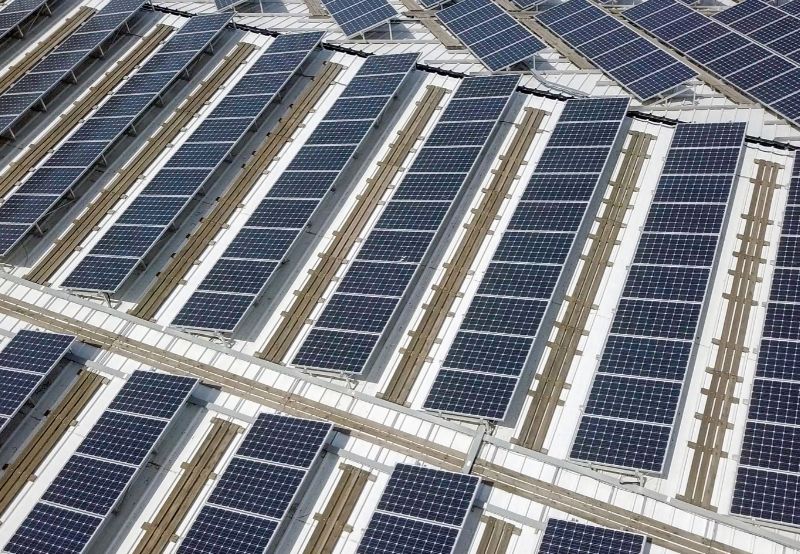
The PM Surya Ghar: Muft Bijli Yojana, the biggest driver of India’s residential rooftop solar installations, is nearing 20 GW of installed capacity. Installations under the program have reached 19.64GW across 5.66 million systems, achieving approximately 67% of the targeted capacity.
India’s solar manufacturing industry may be heading toward consolidation over the next two to three years amid rising input costs, regulatory uncertainty, and increasing competition. In an interview with Mercom India, Hiten Parekh, Chief Business Officer at GREW Solar, said manufacturers could face aggressive pricing over the next two to three quarters as capacity expands faster than demand.
The rapid growth of solar capacity in Gujarat is expected to create a growing challenge in managing end-of-life solar modules and the resulting waste. With a large installation pipeline, Gujarat’s annual solar module waste generation could increase from less than 1,000 tons in 2026 to approximately 20,000 to 70,000 tons during 2040 to 2050, according to a study by researchers from Pandit Deendayal Energy University and King Khalid University.
The Central Electricity Regulatory Commission amended the Connectivity and General Network Access to the Inter-State Transmission System Regulations, 2022. The amendments introduce provisions governing renewable energy generating stations, energy storage systems, and entities seeking connectivity to the interstate transmission system.
Maharashtra is one of India’s largest renewable energy markets, and grid authorities have called for faster implementation of critical transmission strengthening projects. During a recent Central Electricity Authority (CEA) meeting, the Grid Controller of India highlighted delays in important transmission upgrades that could affect the state’s ability to accommodate increasing electricity demand and renewable energy capacity.
The Ministry of Heavy Industries received 22 bids for 10 GWh of Advanced Chemistry Cell manufacturing capacity offered under the production-linked incentive (PLI) program.
Chemical manufacturer Gujarat Alkalies and Chemicals signed share purchase and shareholders’ agreements with Fourth Partner Energy and its special purpose vehicle, FPEL Bhanu, to develop a 39.05 MW captive wind-solar hybrid project in Gujarat.
China’s Standing Committee of the National People’s Congress proposed amendments to the Renewable Energy Law to introduce market-based electricity pricing, minimum renewable energy consumption requirements, and penalties for non-compliance. The proposed changes also seek to improve renewable energy grid integration, strengthen transmission infrastructure, and support energy storage and distributed renewable energy development.


Mercom Staff
More articles from Mercom Staff.