Daily News Wrap-Up: ALMM Expansion to Wafers Raises Capacity Gap Concerns

India ranks third globally in renewable energy capacity

April 10, 2026

thumbnail

Follow Mercom India on WhatsApp for exclusive updates on clean energy news and insights


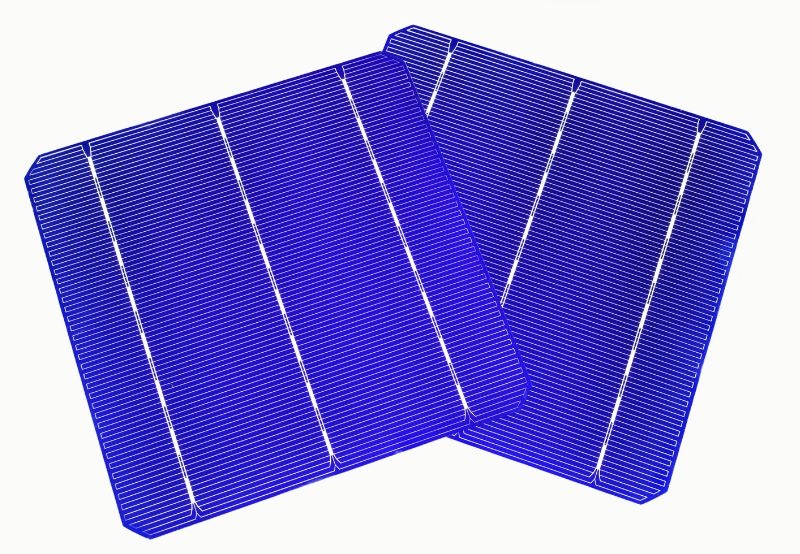
The government’s move to extend the Approved List of Models and Manufacturers (ALMM) framework to solar wafers marks a major step toward building a fully integrated domestic solar manufacturing ecosystem, but industry stakeholders warn that a sharp gap in upstream capacity and a tight compliance window could disrupt supply chains and bidding behavior.

India has climbed to third place globally in installed renewable energy capacity, surpassing Brazil, adding a record 55.3 GW of non-fossil capacity in the financial year (FY) 2026, while total installed non-fossil fuel power capacity reached 283.46 GW as of March 31, 2026. This includes 274.68 GW of renewable energy and 8.78 GW of nuclear capacity.

The Central Electricity Authority (CEA) projected that India’s installed power capacity requirement will reach 1,121 GW by FY 2036, with the share of fossil fuel-based generation declining from the current 75% to 50%. The CEA’s long-term national resource adequacy plan for FY 2027-FY 2036 says coal will continue to serve as the backbone of the power system for baseload supply. Solar, however, will account for the largest share of the installed capacity by FY 2036.

The Uttarakhand Electricity Regulatory Commission raised tariffs for some industrial-category power consumers and retained tariffs for commercial-category power consumers for FY 2027. Industrial category power consumers with a contracted load of up to 1,000 KVA, and for those with a contracted load more than 1,000 KVA and a load factor up to 50%, the tariff has been increased by 6.2% to ₹6.85 (~$0.074)/kVAh from ₹6.45 (~$0.070)/kVAh last year.

Power Grid Corporation of India invited bids to establish a transmission system to evacuate 6 GW of solar power from the Rajasthan Renewable Energy Zone Phase IV (Part 5), Barmer Complex, Barmer II. The following transmission line is included in the scope of work: ±800 kV high-voltage direct current (HVDC) bipole line (hexa lapwing) between Barmer-II (HVDC) in Rajasthan and South Kalamb (HVDC) in Maharashtra, with a parallel dedicated metallic return (Part II).

Hyderabad-based Premier Energies secured orders to supply 1,600 MW of solar cells and modules, worth ₹25.77 billion (~$278.8 million) in the fourth quarter of FY 2026. The company said the contracts were awarded by a mix of domestic independent power producers, module manufacturers, and engineering, procurement, and construction contractors.

Mahindra and Mahindra will procure power from a 30 MW captive solar power project in Punjab, being developed by Neon Hybren, as part of its plan to secure long-term clean energy for its operations. The company approved an investment of up to ₹111.7 million (~$1.21 million) and has executed a share subscription and shareholders’ agreement with Neon and its parent, Mahindra Susten.

A research team led by Japan’s Kyushu University, in collaboration with Germany’s Johannes Gutenberg University Mainz, claims to have achieved a light conversion efficiency of approximately 130% in solar cells, exceeding the 100% barrier. This efficiency, which can enable higher performance in solar cells, was achieved after using a molybdenum-based metal complex called a “spin-flip” emitter to harvest multiplied energy from singlet fission for light conversion.

The global energy transition continued to accelerate in 2025, with renewable energy accounting for 49% of total installed power capacity worldwide, according to a recent report by the International Renewable Energy Agency. Renewables accounted for 85.6% of all new power capacity additions during the year, underscoring their dominant role in electricity system expansion.

The combined global market value of clean energy technologies grew by 20% per year on average over the past decade, reaching nearly $1.2 trillion in 2025, according to a new report by the International Energy Agency. China has remained the largest market for clean energy technologies for a decade, with its market share increasing to 45% in 2025.

Singapore-based solar solutions provider Maxeon Solar Technologies and its subsidiary, Maxeon Solar, submitted an application to the Singapore High Court seeking judicial management, citing financial distress stemming from changes in U.S. policies. Following the filing of the judicial management applications, an automatic statutory moratorium has been imposed from the date of filing until the determination of the applications.

RELATED POSTS

Get the most relevant India solar and clean energy news.

RECENT POSTS