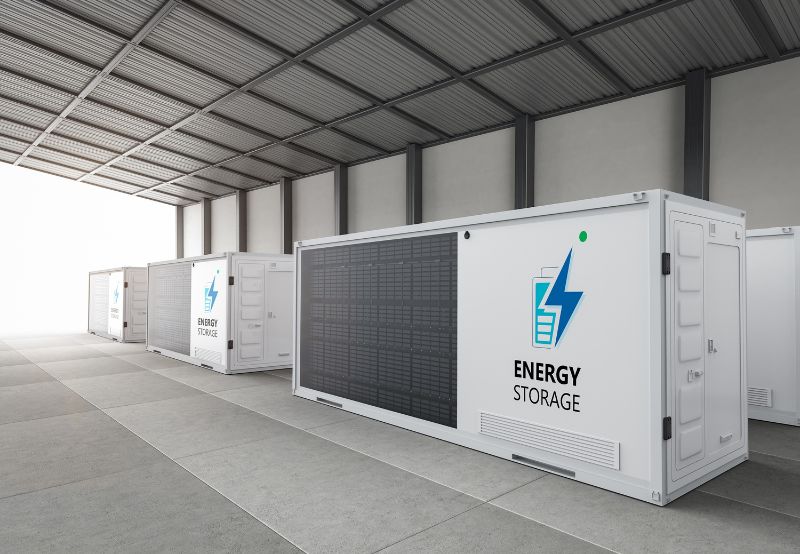
CERC Brings Integrated Energy Storage Systems Under Tariff Framework

Supplementary energy charges are linked to the cost of electricity used to charge the storage system

thumbnail

Follow Mercom India on WhatsApp for exclusive updates on clean energy news and insights


The Central Electricity Regulatory Commission (CERC) has brought integrated energy storage systems co-located with coal-, lignite-, or gas-based thermal generating stations and inter-state transmission systems (ISTS) under the tariff framework, creating a clear regulatory path for their approval, cost recovery, operation, and billing.

The Commission notified these changes through the Terms and Conditions of Tariff (Second Amendment) Regulations, 2026.

Integrated Storage Systems Brought Into Tariff Scope

The amendment formally incorporates integrated energy storage systems into the tariff framework. These are defined as storage systems co-located with generating stations or transmission systems, connected through a common bus, and used to support grid reliability, operational flexibility, or deferring transmission investments.

The regulations introduce a comprehensive set of technical and operational definitions for energy storage systems. These include parameters such as declared capacity, maximum continuous rating, state of charge, battery cycle, and C-rate. The framework also mandates that auxiliary energy consumption of energy storage systems be measured separately for energy accounting, and that rated capacity be adjusted for an annual degradation factor of 2%, subject to periodic review.

Supplementary Tariff Framework Introduced

CERC has created a dedicated supplementary tariff structure for energy storage systems. This includes supplementary fixed storage charges and supplementary energy charges, both to be determined separately by the Commission.

The fixed storage charges are derived from the energy storage systems’ annual fixed costs, which include elements such as return on equity, interest on loans, depreciation, operation and maintenance expenses, and interest on working capital. For energy storage systems installed as additional capitalization, the return on equity has been set at a base rate of 14%.

Supplementary energy charges are linked to the cost of electricity used to charge the storage system. The regulations specify that these charges must be adjusted for round-trip efficiency and auxiliary energy consumption, and provide detailed formulae depending on whether charging power is sourced from the associated generating station, another generating station, or the open market.

In cases where beneficiaries arrange for charging at their own cost, the energy charge rate for the storage systems will be set to zero.

Performance Norms and Technical Benchmarks

The amendment sets normative performance parameters for energy storage systems. These include a round-trip efficiency of 85%, auxiliary energy consumption of 5% of input energy, and a normative availability factor of 90% for storage systems installed at generating stations.

Lithium-ion battery energy storage systems have been assigned a useful life of 15 years, and a depreciation rate of 6.33% has been specified in the schedules. The regulations also provide for initial spares of 4% of the energy storage systems’ capital cost, in addition to those allowed for the original project.

Operation and maintenance expenses for energy storage systems have been set at 2% of admitted capital cost, with annual escalation of 5.25% during the first two years of operation, subject to review by the Commission.

Approval, Filing, and Cost Recovery Requirements

The regulations establish a structured approval process for energy storage systems installation. Generating companies and transmission licensees must share proposals with beneficiaries or long-term customers, seek responses within 30 days, and file for in-principle approval along with detailed information on technology, cost estimates, financing plans, and tariff impact.

For transmission-linked energy storage systems, concurrence from the Central Transmission Utility, National Load Despatch Centre (NLDC), and Regional Load Despatch Centre is required before submission to the Commission. Special timelines are provided for projects covered under viability gap funding schemes.

Following commissioning, petitions for the determination of supplementary tariff must be filed within 90 days, based on actual capital expenditure certified by an auditor.

Billing, Dispatch, and Operational Provisions

The fixed storage charges for systems installed at thermal generating stations will be shared among beneficiaries in proportion to their allocation in the generating station. Meanwhile, charges for transmission-linked energy storage systems will be recovered in accordance with the applicable sharing regulations.

The regulations specify that the first right of discharge from an energy storage system lies with the beneficiary, except where required for secure grid operation. Detailed procedures for charging, scheduling, dispatch, and energy accounting will be developed separately by the NLDC in consultation with stakeholders.

Incentives and Revenue Treatment

An incentive of ₹0.10 (~$0.0011)/kWh has been provided for discharge exceeding the energy corresponding to normative round-trip efficiency.

The amendment also allows energy storage systems to be used for ancillary services or other commercial purposes. For generating stations, net gains from such activities, after cost adjustments, will be shared equally between the generating company and the beneficiaries. For transmission licensees, revenues from storage services will be adjusted against annual transmission charges.

Regulatory Sandbox and Innovation

The regulations introduce a regulatory sandbox provision to support innovation. Generating companies, transmission licensees, and other eligible entities may undertake research and development projects with prior approval, with cost recovery capped at 1% of annual fixed costs or ₹1 billion (~$10.64 million), whichever is lower.

Expanded Filing and Disclosure Requirements

The amendment also revises tariff filing forms to include detailed storage systems-related disclosures. These include information on technology type, battery configuration, capacity, efficiency, cycle life, state of charge, and cost components such as battery packs, power conversion systems, and energy management systems.

Broader Context of the Amendment

In addition to energy storage systems-related provisions, the amendment introduces changes in other areas of the tariff regulations, including provisions on integrated mines, ash transportation expenses, and operational norms for generating stations.

The inclusion of integrated energy storage systems within the tariff framework establishes a formal mechanism for cost recovery, performance monitoring, and regulatory oversight of storage assets deployed alongside conventional power infrastructure.

India’s cumulative installed energy storage capacity reached 490 MWh by the end of June 2025, according to Mercom India Research’s India’s Energy Storage Landscape 1H 2025 Report.

Subscribe to Mercom’s real-time Regulatory Updates to ensure you don’t miss any critical updates from the renewable industry.

RELATED POSTS

Get the most relevant India solar and clean energy news.

RECENT POSTS