CEA Projects India’s Peak Power Demand to Reach 459 GW by 2035-36

Solar is expected to have a share of 45% in the overall power capacity mix

thumbnail

Follow Mercom India on WhatsApp for exclusive updates on clean energy news and insights


India’s peak power demand is expected to rise to 459 GW by 2035-36 from 289 GW in 2026-27, according to the Central Electricity Authority’s (CEA) National Generation Adequacy Plan (2026-27 to 2035-36). The adequacy plan aims to assess India’s generation adequacy mix and suggest initiatives to meet the country’s projected electricity demand for the coming decade.

Demand Projection

With the projected rise in peak demand to 459 GW by 2035-36, the CEA report states that India’s yearly electricity requirement is expected to increase from 1,929 billion units (BU) to 3,365 BU over the same period.

It projects peak demand to grow at a 5.58% compound annual growth rate (CAGR) and energy requirement at a 6.41% CAGR through 2035-36. The projections also account for emerging loads such as electric vehicles and green hydrogen.

Projected Peak Electricity Demand and Electrical Energy Requirement


In a lower-demand scenario, the projected peak demand in 2035-36 will fall from 459 GW to 446 GW. Energy requirement will fall from 3,365 BU to 3,215 BU, total capacity from 1,121 GW to 1,054 GW, and storage requirement from 174 GW to 128 GW.

Solar’s Share to Reach 45%

The study found that in the base case scenario, India’s total installed capacity will rise from 520 GW in January 2026 to 1,121 GW by 2035-36.

The power mix by this period is expected to consist of 315 GW from coal, 20 GW from gas, 22 GW from nuclear generation, 78 GW from large hydro projects, 509 GW from solar, 155 GW from wind, and 22 GW from other renewable sources. Solar’s share in the country’s total installed capacity will reach 45%, while coal’s share will fall to 28%.

Projected Installed Capacity Requirement (GW)


However, the report notes that coal will remain the largest electricity producer in 2035-36. Coal is expected to generate 1,819 BU, 51% of the gross generation of 3,596 BU. Solar power will generate 984 BU at 27%, wind 320 BU at 9%, hydroelectricity 256 BU at 7%, nuclear power 147 BU at 4%, and gas 56 BU at 2%.

Source Wise Projected Gross Generation (BU) in 2035-36

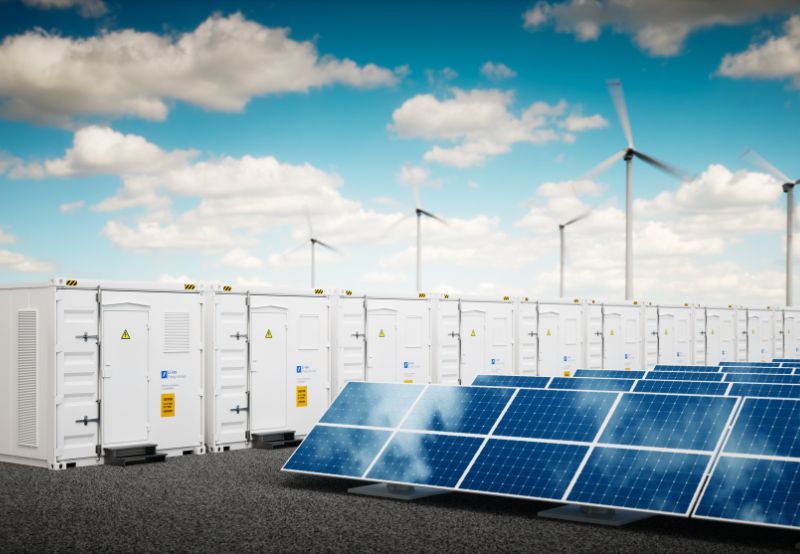
Storage is projected to grow to 174 GW/888 GWh by 2035-36. This capacity will include 80 GW from battery energy storage systems (BESS) and 94 GW from pumped storage projects (PSP).

Electricity Demand Analysis

The study shows that peak demand generation in both the 2024-25 and 2025-26 periods (till January 31, 2026) was generally higher than during non-solar hours, with the gap widening between November and March.

The all-India peak demand for solar hours occurred in May for the 2024-25 period and in January for the 2025-2026 period. In 2025-26, solar hour demand remained in the 190 GW to 220 GW range for approximately 90% of the time.

Demand varied across different states. Some states have complementary demand. This means one state faces peak demand while the other witnesses reduced demand. This difference in demand can help in power sharing.

During the top 10% of demand periods in 2024-25, solar generation had a median of approximately 44 GW, ranging from 17 GW to 66 GW. Wind generation ranged from 1 GW to 25 GW, with a median of 7 GW, and hydroelectricity generation ranged between 5 GW and 29 GW.

The study found that the most common continuous top non-solar peak period for storage sizing was approximately six hours, comprising 24 blocks of 15 minutes each.

The block-wise demand during 2023–24 and 2024–25 remained within ±10% for approximately 90% of the time blocks. Solar power generation averaged 28 GW between July and August, and 48 GW to 51 GW between February and March. Wind energy generation averaged approximately 18 GW in July. However, it averaged only around 3 GW between October and November.

Future Power Strategy

The CEA advocates expanding non-fossil-fuel power generation to meet India’s future electricity needs and achieve the country’s energy transition goals. It calls for planning to facilitate the increase in solar generation from approximately 141 GW in 2025-26 to roughly 509 GW by 2035-36. During the same period, the CEA expects wind generation to expand from 55 GW to 155 GW and generation from large hydroelectric projects to rise from 51 GW to nearly 78 GW.

It also calls for planning for nuclear capacity expansion from 8.78 GW to about 22 GW in 2035-36. The CEA expects the overall non-fossil fuel capacity to reach approximately 786 GW by 2035-36.

The CEA pushes to expand energy storage capacity to meet the growth in renewable energy capacity. It highlights the expected growth in PSP capacity to roughly 94 GW by 2035-36 and in installed BESS capacity to 80 GW from the current 7.2 GW and 0.27 GW, respectively.

The adequacy plan notes that 2.58 GW of the commissioned PSP capacity is off-stream. To help achieve the planned capacity, the CEA highlights the roadmap to reach 100 GW of PSP by 2035-36, which it unveiled in January this year. The roadmap involves accelerating project clearances, promoting off-stream projects, providing budgetary support, and incentivizing private sector participation.

The CEA projects planning reserve margins (PRM), the percentage of extra electricity generation capacity needed above the forecasted peak demand to ensure grid reliability, to reach approximately 13-14% in 2035-36.

It called for adequate PRM of approximately 13% to 14%, in conjunction with capacity additions, to ensure system adequacy remains aligned with evolving operational requirements.

In the adequacy plan, the CEA supports expanding interstate and intrastate transmission corridors to help integrate large-scale renewable and energy storage capacity. It also calls for adopting smart grid technologies, demand-side response mechanisms, and advanced forecasting systems to help maintain grid stability under dynamic operating conditions.

Highlighting the expected decline of fossil fuel-based generation from approximately 75% in 2025-26 to roughly 50% by 2035-36, the CEA suggests diversifying the country’s energy reliance on sources such as solar, wind, hydroelectricity, and energy storage systems to maintain grid reliability. This diversification could also enhance India’s power system resilience during the energy transition period.

The CEA supports setting up compensatory mechanisms to help further lower the minimum operating limit of coal-based power plants from the established 55%, as well as regulatory reforms to ensure coal’s flexible role in supporting grid reliability without compromising plant longevity.

India’s renewable energy capacity, including large hydroelectric projects, reached 258.3 GW, with solar power accounting for 26.5% of India’s total installed power capacity and 52.7% of the total installed renewable energy capacity as of December 2025.

RELATED POSTS

Get the most relevant India solar and clean energy news.

RECENT POSTS